
The strongest earthquake was recorded at 6.08pm on Sunday, with a magnitude of 3.1 on the Richter scale
Want to bookmark your favourite articles and stories to read or reference later? Start your Independent Membership today.
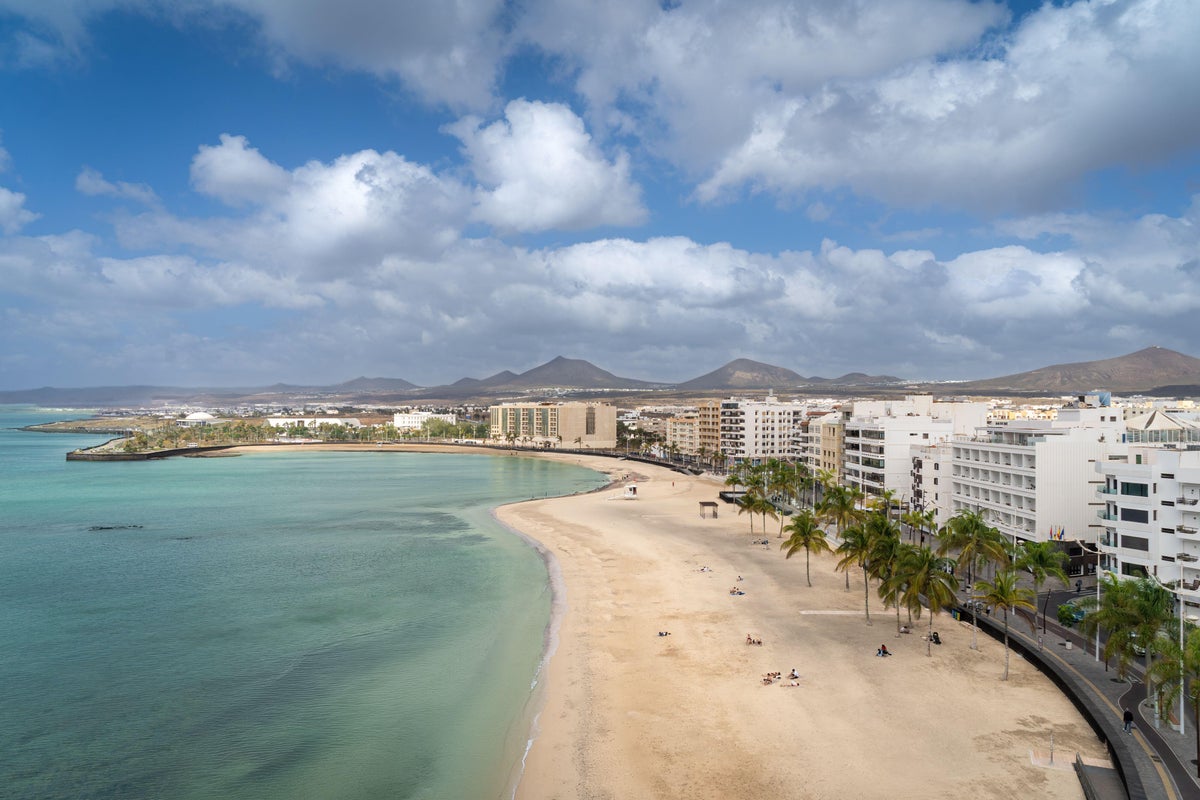
Two earthquakes have been recorded off the coast of a popular tourist destination, with the strongest measuring a magnitude of 3.1 on the Richter scale.
A 2.6 magnitude tremor was recorded at 4.36am local time, at a depth of 19.2 miles, near the island of Lanzarote.
The stronger earthquake occurred some 14 hours later, at around 6.08pm, to the west of the island.
According to local news, Spain’s National Geographic Institute (NGI) listed the location of tremors under the broad geographical label “Atlántico-Canarias”.
This means they occurred in a remote, offshore location, opposed to immediately beside the island’s coastline.
No damage or significant reports of being able to feel the earthquake have been reported.
It follows several smaller tremors that have recently occurred around the Canary Islands. However, all of these quakes recorded below 3 magnitude on the Richter scale – which are classed as micro-earthquakes.
Micro-earthquakes do not tend to cause damage to infrastructure and are rarely felt – unless you are located very close to the epicentre or in a high-rise building.
Seismic activity is common around the Canary Islands, particularly in the channel between Tenerife and Gran Canaria.
“Nowadays there are about 400-500 earthquakes per year in this zone, of which between 5 and 7 are of magnitude bigger than 2.5,” said NGI.
“The seismicity is produced at depths between 0 and 40 km. It was in this area where one of the biggest earthquakes in the Canary Islands occurred during the last 50 years, on May 9, 1989 with a magnitude of 5.2 and which was widely felt in the islands of Tenerife and Gran Canaria.”
Earthquakes of this magnitude are rare, and most of the tremors that occur offshore in the Canarian region tend to go unnoticed by holidaymakers.
The UK’s Foreign, Commonwealth & Development Office (FCDO) has no warnings on its travel advice website about earthquake risks in the area. It does, however, warn about extreme weather such as flash flooding and heatwaves - as well as wildfires.
Join thought-provoking conversations, follow other Independent readers and see their replies