

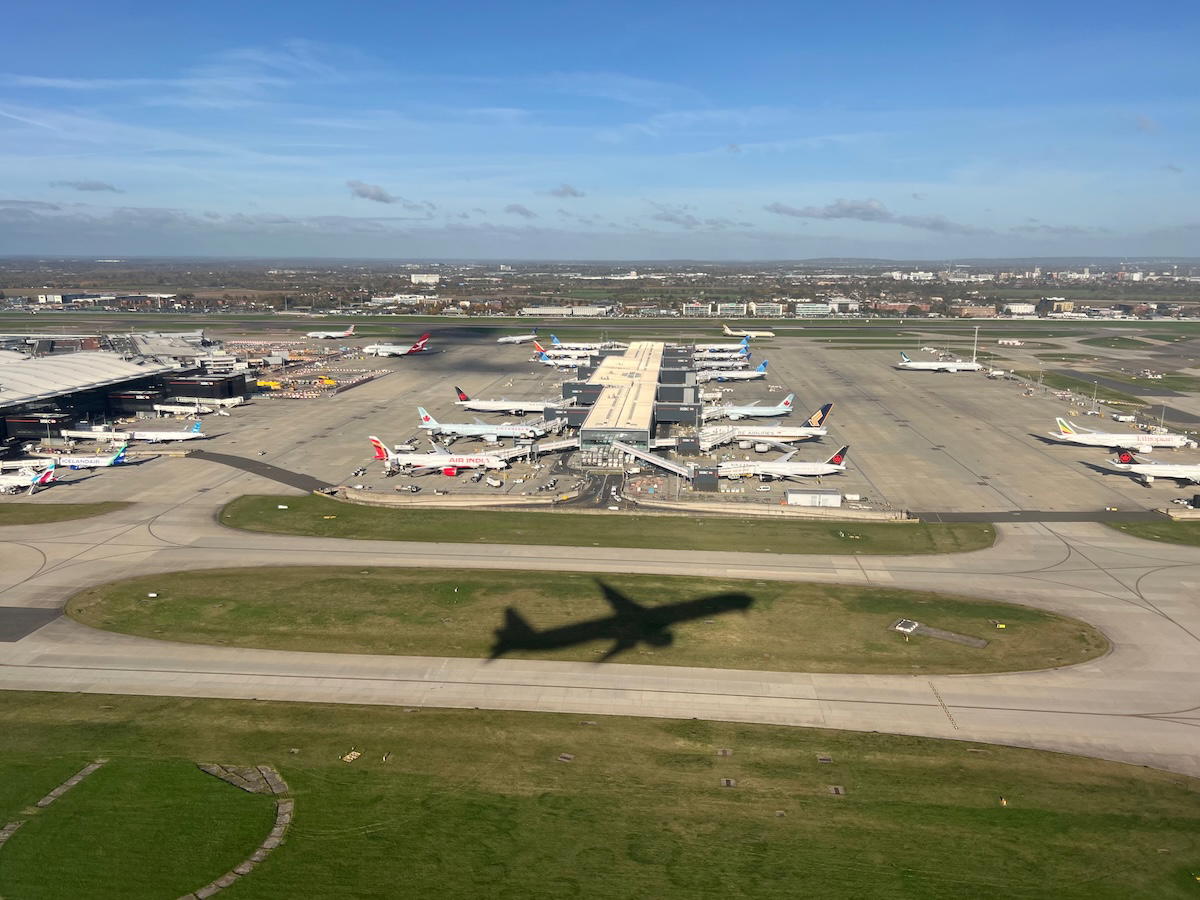
Delta and Virgin Atlantic will have to change terminals at London Heathrow Airport in 2028 due to a terminal occupancy review.
Over the past couple of years, the operators of London Heathrow Airport (LHR) have been conducting a terminal occupancy review, which impacts which airlines operate out of which terminals. The results are now in, and five airlines will have to change terminals in 2028. The big losers here are Delta and Virgin Atlantic. Let’s talk a bit about the concept behind this review, and then discuss the results…
First for some context, here’s how a spokesperson for Heathrow Airport describes the concept behind these terminal occupancy reviews:
“Occupancy reviews are a normal part of running the airport – it’s how we ensure we make best use of the space that we have. We undertake these reviews usually once a decade to accommodate for changes in airline operations and airport infrastructure – the last review was in 2014 to coincide with the opening of Terminal 2.”
“The objective in these reviews is to make the best use of the limited space at Heathrow, particularly focusing on driving overall operational resilience and matching available capacity with demand – this enables us to protect passenger experience of travelling through the airport.”
Heathrow is one of the busiest airports in the world, and is heavily capacity constrained. The intent with any sort of a review is to distribute traffic throughout terminals as much as possible, so that there’s an efficient, steady flow of passengers. The goal is also to streamline connections as much as possible. Airline partnerships and strategies change all the time, so terminal allocations are intended to reflect that.
Admittedly Heathrow is capped in terms of its growth, given the airport’s valuable slot system. Currently Heathrow’s capacity constraints aren’t limitations on terminal traffic, but rather, on takeoffs and landings. While there are once again discussions about Heathrow getting a third runway, it’s anyone’s guess if it happens. Even if it does move forward, the project would be complete in 2039 at the absolute earliest.
As a basic recap of the current terminal situation at Heathrow (in order of traffic levels):
Heathrow Airport has just revealed the results from its latest terminal occupancy analysis, and the expectation is that these changes will take place in 2028. Specifically, five airlines will have to change terminals, as follows:
In total, these airlines account for nearly two million passengers per year, and represent under 4% of traffic at Heathrow. Unsurprisingly, the goal here is largely to move airlines out of Terminal 3, given that it’s the second busiest terminal, and has a lot of peak hour traffic.
As you’d expect, Delta and Virgin Atlantic are furious about this. Virgin Atlantic CEO Corneel Koster has said the following:
“If implemented in 2028, Heathrow’s decision to separate Delta Air Lines from Virgin Atlantic, moving Delta to the remotely located Terminal 4, would create friction for customers, weaken competition and reduce choice. As all other airports seek to co-locate joint venture partners, Heathrow has chosen to split ours after more than a decade together. If this goes ahead, consumers will pay the price.”
The argument is that this further supports British Airways’ “monopoly.” British Airways benefits from this, by co-locating with another joint venture partner, while the airport’s second biggest airline is split from its primary partner. I certainly understand their frustration here…
Over the past couple of years, Heathrow Airport has been conducting a terminal occupancy review. These are done roughly once every decade, and the goal is to make terminal operations more efficient, and to consider how traffic levels at each terminal have evolved over time.
The results of the review are now in, and five airlines will be changing terminals. The most significant move is that Delta is being kicked out of Terminal 3, and will have to move to Terminal 4. Delta and Virgin Atlantic have a joint venture, so them no longer being co-located is viewed as a m