

LOS CABOS — For Los Cabos, success is not simply about bringing more travellers through the airport – it’s about giving them reasons to stay longer and return. The destination is hoping to do just that with the approximately 300,000 Canadian visitors that are expected to visit in 2026, up from 200,000 just two years earlier in 2024.
LOS CABOS — For Los Cabos, success is not simply about bringing more travellers through the airport – it’s about giving them reasons to stay longer and return.
The destination is hoping to do just that with the approximately 300,000 Canadian visitors that are expected to visit in 2026, up from 200,000 just two years earlier in 2024. As Los Cabos’ second-largest international market, Canada is integral to the destination’s long-term growth plans, particularly since Canadians have historically stayed twice as long as U.S. visitors.
“Canadians stay longer, an average of 11 nights – and spend double, about $4,600 per trip,” said Rodrigo Esponda, Managing Director of the Los Cabos Tourism Board, who sat down with Travelweek this week during his visit to Toronto. “When Canadians come, they’re not looking just to have a quick getaway of two, three or five days. In many cases, it’s their annual winter vacation and they try to take advantage.”
Many more are expected this winter, with five new nonstop routes from Canada contributing to a 35% increase in seat capacity. Porter Airlines will launch 3x/weekly service to Los Cabos from Toronto and 4x/weekly service from Edmonton beginning Nov. 16, followed by twice-weekly Ottawa flights on Dec. 18. Air Transat will also be returning to the destination with weekly nonstop Montréal service on Dec. 10, while WestJet will introduce weekly Regina flights on Dec. 14.
Diversifying its Canadian market is part of the tourism board’s strategy, until now has been focused largely on the west coast. According to Esponda, Toronto is the Los Cabos’ fastest-growing market in Canada.
“We understand that the west coast of Canada is our natural market, but we need to start building more awareness and diversifying to the east,” he said. “We’ve been accumulating growth in Canada since the pandemic, growing double digits bit by bit. The last two years in particular have been outstanding.”
The tourism board’s research into Los Cabos’ brand perception in Canada identified three key attributes that Canadians value about the destination: its contrasting geography, hotel quality and safety.
The diverse landscape offers a wide range of outdoor activities year round, from hiking and four-wheel driving, to biking, whale watching and marine safaris.
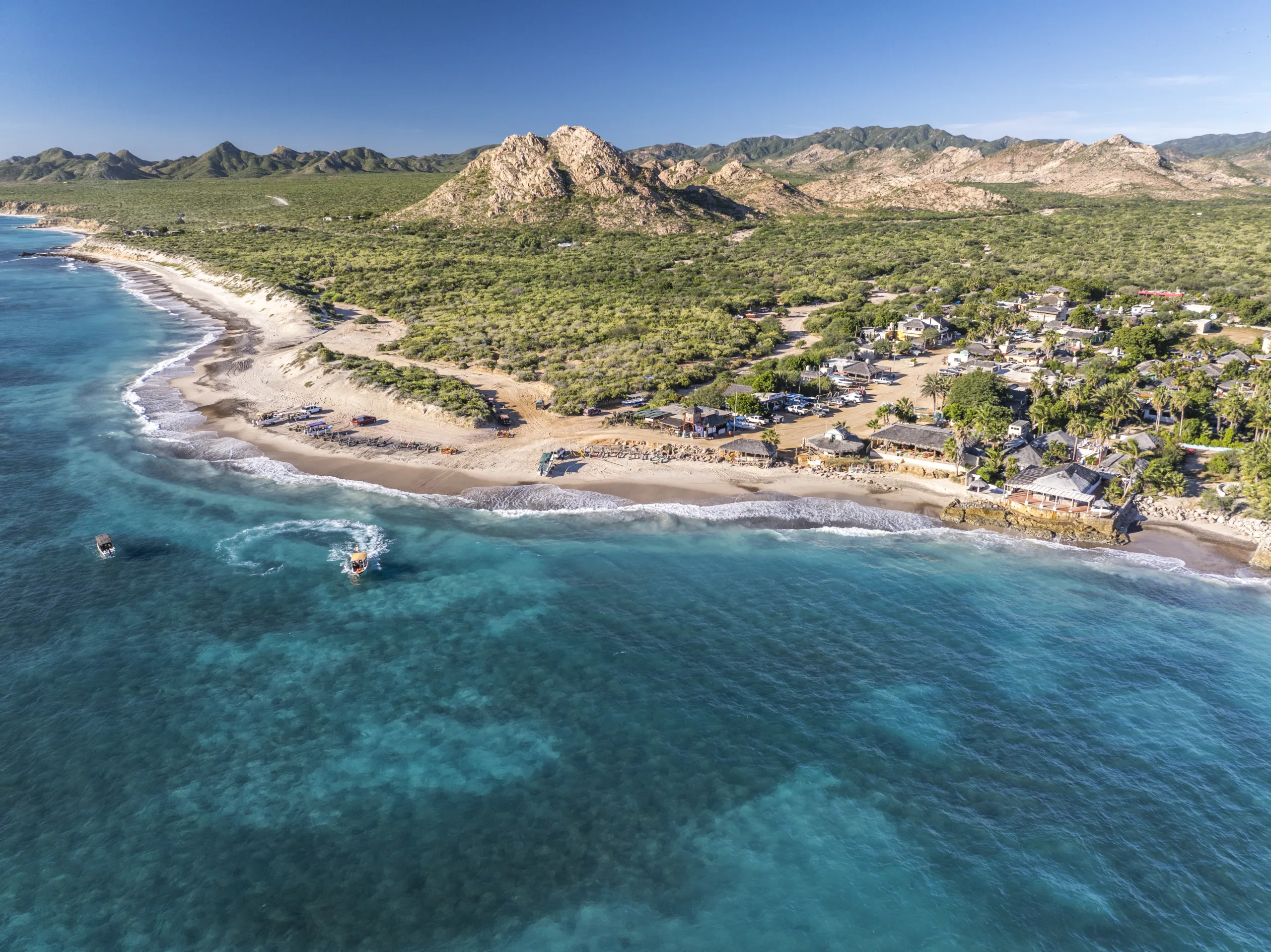
“Canadians love the fact that Los Cabos isn’t flat – we have mountains, oceans and desert, all in one place,” said Esponda.
Also highly valued among Canadians are Los Cabos’ hotels, none of which are high-rises, most of which offer a boutique experience. This, added Esponda, is part of the destination’s efforts to preserve its “exclusive” feel and authenticity.
“We have strict restrictions in place on the number of rooms we can build according to the area,” he said, adding that many properties have fewer rooms than large-scale resorts elsewhere. “We are aiming for quality, not quantity.”
Still, more than 1,200 hotel rooms are in the development pipeline through 2029. Planned additions include Park Hyatt Cabo del Sol, the brand’s first property in Mexico, and Grand Hyatt Los Cabos Resort, Golf & Spa, which will feature 301 rooms, restaurants, pools and an Ernie Els-designed golf course. The St. Regis Los Cabos at Quivira will also introduce a resort and private residences, while Conrad Los Cabos, SIRO Palmilla and Raffles are among other brands planning properties in the destination.
Esponda said development is expanding along the Pacific coast and the Sea of Cortez, rather than concentrating new hotels in existing areas. Growth continues to follow the urban planning framework established when Los Cabos was developed 50 years ago, with Cabo San Lucas and San José del Cabo designed as two connected centres about 30 kilometres apart. He said maintaining that framework has helped keep development measured.
“We understand sustainability as a path – not as an end.”
In keeping with its approach to sustainable growth, Los Cabos has taken a measured approach to cruise tourism, with cruise ships anchoring in the bay and passengers tendering ashore rather than docking at a dedicated cruise port.
The destination has a carrying-capacity limit of three cruise ships at a time, depending on vessel size, with specific guidelines governing how ships can arrive and passengers disembark.
Esponda said the approach has helped preserve the visitor experience while encouraging some cruise passengers to return for longer land-based vacations.
The tourism board’s exit surveys found that 20% of visitors who had previously been to Los Cabos had first arrived on a cruise.
“Somebody comes on a cruise, and then they want to return,” he said. “When they come back, they do it on an air vacation.”
Los Cabos received approximately 600,000 cruise passengers last year, alongside 3.75 million air arrivals, Esponda said. He also noted that the cruise season has been extending beyond its traditional winter period, with more arrivals during the summer months. This, he added, has enabled the destination to keep cruise growth at sustainable levels, spreading out visitors throughout the year.
Esponda made it abundantly clear: travel advisors are essential to Los Cabos’ tourism growth, accounting for approximately 30% of travellers arriving in the destination. He expects their role to become even more important in the future.
“Travel advisors are the best way for travellers to match their expectations of the destination to what they can actually get in the destination,” he said. “This is why we devote a lot of time into our relationships with advisors. Their role is truly important – they give the right advice to their clients and qualify the experience that they’re looking for.”
The Los Cabos Tourism Board supports advisors through its destination specialist program, incentives, FAM trips, training and partnerships with travel consortia including Virtuoso, Ensemble, Signature and Internova.
Resources like travel guides, marketing materials, incentives, videos, maps and even an AI chatbot that can help build itineraries are available here on the Los Cabos Tourism Board’s website, are available through visitloscabos.travel, where advisors can find guides, maps, marketing materials, training and incentive information.
To become a Los Cabos Specialist, click here. For more information about Los Cabos, go to https://www.visitloscabos.travel/.
Lead image caption: Rodrigo Esponda, Managing Director of the Los Cabos Tourism Board
Cindy is Deputy Editor at Travelweek and has worked for the company since 2007. She has travelled to more than 50 countries and counts Kenya, Morocco, Thailand and Turkey among her favourite destinations.