
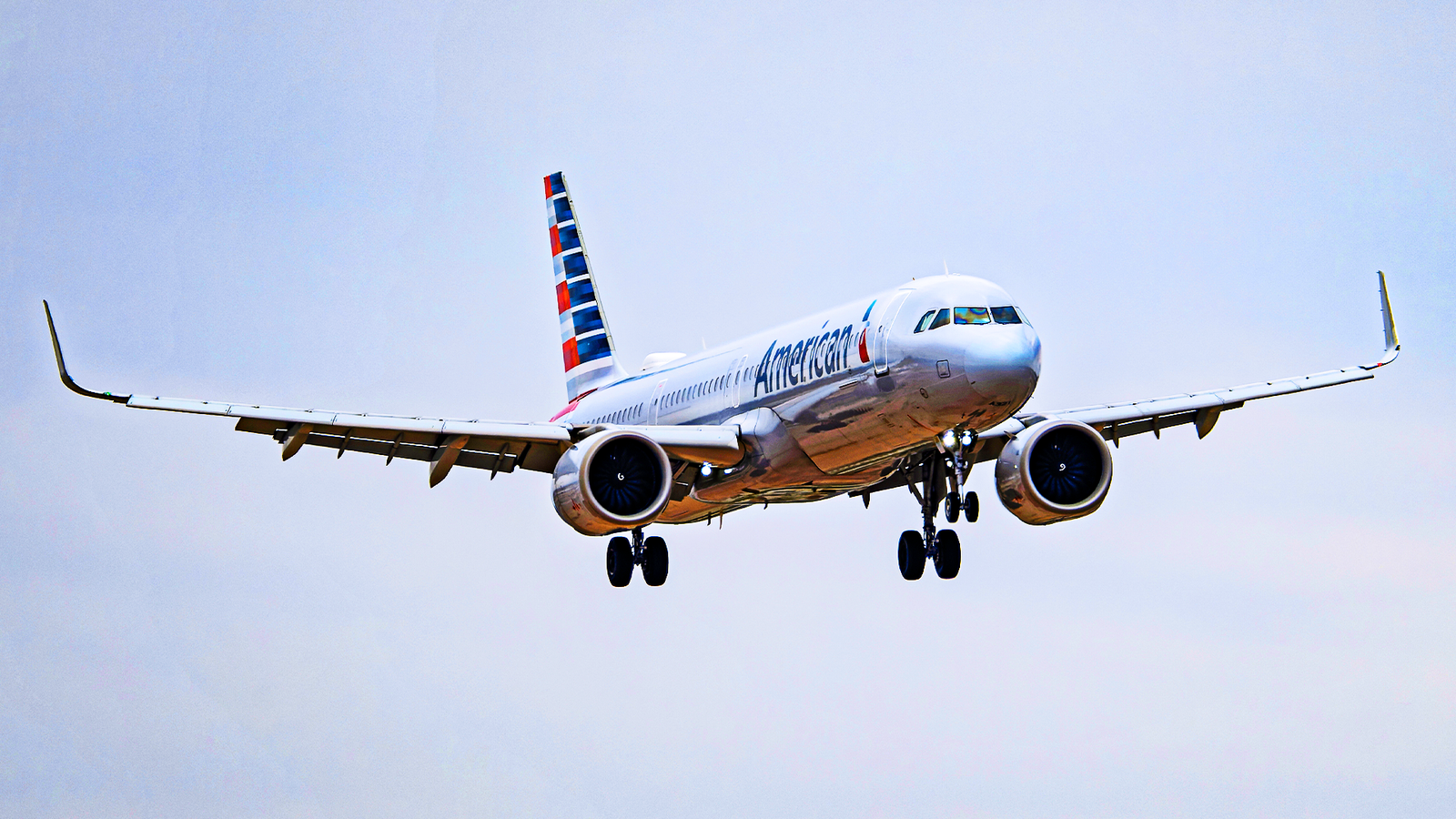
Several of the carrier's A321neos were ordered by a different airline.
American Airlines operates one of the largest Airbus A321neo fleets in the world, using the narrowbody aircraft to serve a variety of domestic and international routes. However, not every A321neo in its fleet is quite the same. Among its aircraft are 10 examples inherited from Alaska Airlines, which originally acquired them following its takeover of Virgin America. Although these aircraft offer similar capabilities to American's other A321neos, their original design has created an unusual fleet-management challenge.
The story goes back to 2017, when Virgin became the first airline to receive an A321neo. Several years and two airline ownership changes later, some of the aircraft eventually found their way into American's fleet. The problem is that they were built before Airbus introduced a significant cabin-design change, meaning American's cannot configure them in exactly the same way as its newer A321neos. This difference has also created an unexpected complication for passengers selecting their seats.
The A321neo represented an important development for the European manufacturer, bringing improved fuel efficiency, reduced emissions, and lower noise levels to the largest member of its A320neo family. Virgin became the launch operator of the aircraft, receiving the first example at a delivery ceremony in Hamburg, Germany, in April 2017. The aircraft was powered by CFM International LEAP-1A engines. At the time, Airbus highlighted the aircraft's ability to deliver fuel savings of at least 15% compared with previous-generation models.
It also offered greater passenger capacity and longer range, making it an attractive option for airlines looking to improve the economics of their short- and medium-haul operations. Virgin planned to use the aircraft to expand its existing Airbus fleet while maintaining its distinctive onboard experience. The first aircraft was configured with 185 seats and was expected to enter commercial service on May 31, 2017, operating its inaugural flight between San Francisco International Airport (SFO) and Ronald Reagan Washington National Airport (DCA).
Its cabin included Virgin's familiar premium-oriented features, including multiple service classes and personal entertainment systems. The delivery was particularly significant because it marked the arrival of the first A321neo anywhere in the world. However, Virgin's relationship with the aircraft would not last independently for very long. Alaska Air Group had announced its acquisition of Virgin in April 2016, completing the transaction in December that year. The subsequent integration brought the two airlines together under the Alaska brand, creating a new chapter for Virgin's aircraft and outstanding orders.
Following the acquisition, Alaska inherited Virgin's aircraft and commitments, including its A321neo order. The aircraft were therefore no longer being introduced into an independent Virgin fleet, as originally intended. Instead, they became part of Alaska's broader operations, although the transition did not mean that every aircraft immediately entered service with the acquiring airline. Virgin had originally ordered 10 A321neos, and the aircraft subsequently became part of the complicated fleet transition following the acquisition.
Only four of the 10 aircraft eventually transferred to American had actually operated for Virgin. This is an important distinction because the aircraft's original configuration was determined before the later ownership changes took place.
American ultimately took these 10 aircraft from Alaska, adding them to its growing Airbus narrowbody fleet. The transfer provided American with additional capacity without requiring it to introduce an entirely new aircraft family. Nevertheless, the inherited aircraft came with a design characteristic that distinguished them from the A321neos that the oneworld carrier had ordered directly from Airbus.
The aircraft were among the earliest A321neos produced, meaning they predated Airbus' Cabin Flex arrangement. Consequently, although they shared the A321neo name and many of the same underlying characteristics, their cabin layouts were fundamentally different. This would become particularly important when American began integrating them into its own passenger operations.
The central issue concerns Airbus Cabin Flex, a redesigned exit-door arrangement introduced to provide airlines with greater flexibility when configuring the A321's cabin. Rather than relying entirely on the older arrangement of four pairs of exits, the updated design repositioned certain emergency exits, including the overwing exits, to create additional opportunities for seat installation. The earlier aircraft inherited from Alaska retained the original arrangement, featuring eight exits in total, with four on each side of the fuselage. This was broadly comparable to the configuration used on the older A321ceo.
While perfectly suitable from an operational and safety perspective, it limited how the airline could arrange seats compared with the newer Cabin Flex-equipped aircraft. The distinction matters because the position of emergency exits influences the number of seats that can legally and practically be installed in an aircraft cabin. Cabin Flex allowed airlines to make better use of available cabin space, supporting higher-density configurations without changing the aircraft's fundamental dimensions.
American's newer A321neos therefore benefit from a different layout that accommodates additional economy seating. The difference is also reflected in aircraft classification. American's newer aircraft are identified as A321-200NX models, while the former Alaska aircraft are listed as A321-200Ns. Although the distinction might appear relatively minor, it represents a meaningful physical difference that American has had to accommodate.
The latest data from ch-aviation shows that today, Alaska operates the following fleet.
American began introducing the former Alaska A321neos into passenger service from Miami International Airport (MIA) in spring 2024. Rather than immediately undertaking a complete interior refurbishment, the airline initially retained the aircraft's existing Alaska cabin configuration. This allowed the aircraft to enter service while preserving much of the arrangement they had operated with previously. The original layout provided 190 seats, divided between 16 seats in first class and 174 seats in the main cabin.
Compared with American's more conventional A321neo configuration, this meant fewer first-class seats but generally more space throughout the passenger cabin. For travelers, the difference was not necessarily negative, as the original arrangement offered a relatively spacious experience. However, retaining the inherited interior was not a permanent solution for an airline operating a large fleet with established cabin standards.
American has spent considerable effort standardizing its narrowbody interiors through its Oasis refurbishment program, which introduced consistent seating arrangements and onboard features across numerous aircraft. The former Alaska A321neos would eventually need to undergo a similar transformation.
The first aircraft to receive the Oasis interior was N950XV, which underwent its refurbishment in San Antonio. The project demonstrated that American could bring the aircraft closer to its existing onboard standards, but it could not completely eliminate the differences created by their original construction. The aircraft's exit-door arrangement would continue to determine how many seats could be installed.
Following their refurbishment, the 10 former Alaska aircraft adopted a 190-seat configuration consisting of 20 first-class seats and 170 economy seats. This brought their premium-cabin capacity into line with American's standard arrangement, while retaining a smaller total number of seats than the airline's newer A321neos. The result is a cabin that looks more familiar but remains