
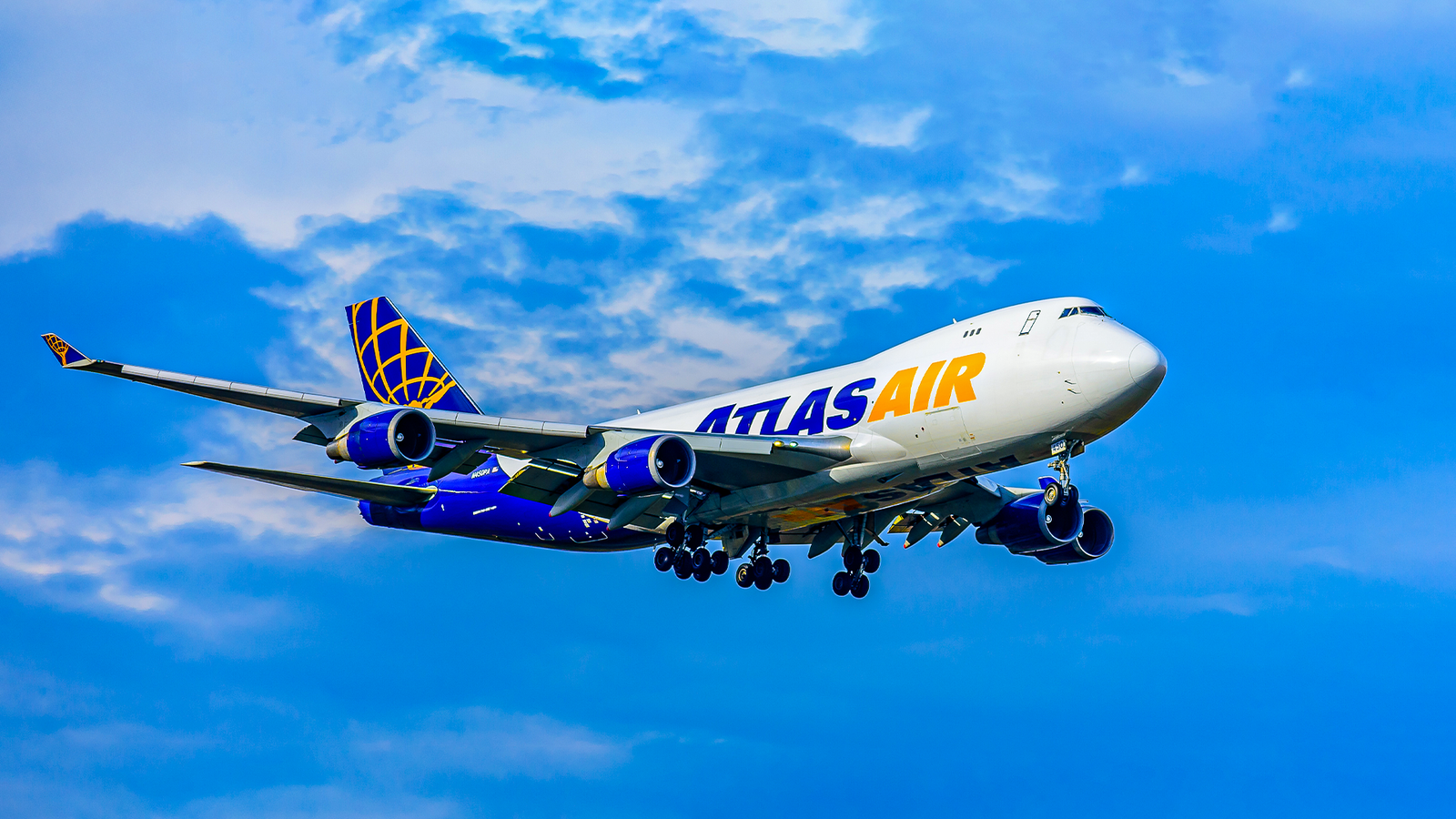
Explore how the Boeing 747 evolved from Cold War ambitions into an aviation icon, culminating in the advanced 747-8 Intercontinental.
Chris earned a Master’s degree in Defense and Strategic Studies (Highest Honors) from the University of Texas at El Paso.
His graduate work concentrated on Global and National Security, Low-Intensity Conflict, Modern Warfare, and US grand strategy. He also undertook extensive regional studies, analyzing how key regions integrate into the broader US security architecture.
This rigorous program provided him with a comprehensive understanding of U.S. military operations, global strategy, and weapons systems. Additionally, he gained a strong appreciation for great power competition.—an increasingly central force shaping international relations and conflict for the foreseeable future.
Born in an era of Cold War competition and growing military airlift needs, the Boeing 747 became one of the most recognizable and influential aircraft in aviation history. Since entering commercial service in 1970, the jumbo jet has transformed passenger and cargo transport worldwide.
Spanning five generations, the 747 evolved alongside the aviation industry, culminating in the technologically advanced 747-8. Yet, its arrival coincided with a shift toward smaller, more fuel-efficient twin-engine aircraft, signaling the beginning of the end for the iconic four-engine airliner.
As a doctrine, Flexible Response was initiated by the Kennedy administration to confront the challenges posed by the Soviet Union on various fronts. As opposed to the doctrine of Massive Retaliation, which relied heavily on the threat of massive nuclear counterstrikes, Flexible Response, introduced in 1961, provided the president with enhanced options when confronting a crisis, ranging from greater nonmilitary to military responses. These options included diplomatic, political, and economic measures, as well as strengthening the military's ability to respond quickly wherever Soviet pressure emerged.
Regarded as the architect of Flexible Response, General Maxwell Taylor advocated for five central pillars concerning the military aspect of the new doctrine. According to the US Army War College Quarterly, Parameters, the second pillar called for the military to be revitalized to conduct warfare at levels below general or all-out war. The third pillar emphasized the need for a continental US-based, active-duty force in a high state of readiness. These personnel would be ready at a moment's notice for rapid deployment overseas to support forward-operating US military forces or allies.
Crucially, for the development of what would become the 747 was the fourth pillar, which highlighted the need to "...modernize and increase the size of air and sealift forces to provide a major capability for the rapid deployment of the active duty forces in the United States, and for resupply of all committed forces."
Moving the required military personnel to a contested region requires speed. If this were done solely by sea, a critical opportunity to halt a Soviet or Soviet-sponsored force could be missed. To this point, the United States Air Force (USAF) stated that "President John F. Kennedy, in his first defense message to Congress in March 1961, announced the buildup of the airlift forces to support flexible response..."
Following this announcement, President Kennedy endorsed the immediate development of the Cargo Experimental-Heavy Logistics System (CX-HLS) program. The five competitors were Lockheed-Georgia Company, Boeing, Douglas Aircraft Company, General Dynamics, and Martin Marietta.
The future of providing the USAF and, by extension, the US military with timely logistics and surge capacity in a geographic region under Soviet duress was a major priority. On December 22, 1964, Secretary of Defense Robert S. McNamara announced approval of the plan to develop a new outsized logistics aircraft, moving the CX-HLS competition forward.
By May of that year, proposals for the aircraft had been received from the competing companies. After a down-select, Boeing, Douglas, and Lockheed Martin each received one-year study contracts for their airframe designs, while General Electric and Pratt & Whitney received contracts for engine development.
According to a December 1964 issue of Boeing Magazine, the company said competitive subcontracting for the project could total more than $1 billion (£745.7 million), equivalent to about $10.87 billion (£8.1 billion) today. Furthermore, the magazine explained, "The airplane could be the largest ever built. More than 11,000 suppliers in the United States and Canada will participate in the program if Boeing wins the contract."
The Journal of Aircraft and Spacecraft Technology summarized the competition.
"The Air Force considered Boeing's design better than the Lockheed design, although Lockheed's proposal was the lowest total cost bid. Lockheed was selected the winner in September 1965, then awarded a contract in December 1965. General Electric's engine design was selected in August 1965 for the new transport..."
On December 17, 1969, the first C-5A Galaxy was delivered to the 443d Military Airlift Wing, located at Altus Air Force Base, Oklahoma. Today, the USAF maintains a fleet of 52 C-5s. The aircraft has a maximum payload of 281,001 lb (127,460 kg) and an unrefueled range of 5,524 statute miles (8,890 km), according to the USAF. The aircraft would remain a mainstay of America's strategic airlift capability until the Lockheed Martin C-17 entered service in 1995.
Although Boeing suffered a stinging loss in its bid for the major Air Force contract, the company bounced back at a critical juncture in commercial aviation. According to R. A. Davis, a former Chief Project Engineer for the Boeing 747, "Revenue passenger-miles (less than 50 billion in 1955) had more than tripled by 1965 on a rapidly rising trend. Air travel was forecast to reach at least 500 billion passenger-miles by the mid-1970s, and almost a tenfold increase in air cargo was predicted for the same period."
Furthermore, at the time, passenger traffic was expected to approximately double every five years. With airports already congested, adding more aircraft to accommodate traffic growth would only compound the problem.
Elaborating on this issue, Davis explained that if the congestion problem went unresolved, "By 1975, about 20 million departures of 707-sized aircraft would have to be scheduled each year to meet the predicted world demand. By contrast, if airplanes of 350-400 passenger capability were phased into the long-haul routes, it was estimated that annual departures could be reduced to about 12 million." Clearly, manufacturing larger aircraft appeared to be a promising way forward.
Taking on the challenge, in 1965, Boeing tasked its Chief Engineer, Joe Sutter — widely known as the Father of the 747 — with reviewing the aircraft's design and reconfiguring it for commercial use. In doing so, the Northwest Airlines History Center states that the "...rear ramp and high wing were traded for a conventional layout, but the option for nose loading was retained — pushing the cockpit above the main deck and creating the distinctive “hump” and upper-deck cabin."
Incredibly, the aircraft went from the drawing board to a completed aircraft in a remarkably short period. In a piece by Airline Reporter, Mr. Sutter stated that "...Pan Am placed its first order in 1966, and we rolled out the first aircraft in 1968, with the first flight in 1969, followed by entry into service in early 1970.” During its first year of service, the 747-100 ushered in a new era of wide-body transportation. Within that short period of time, Mr. Davis stated that the 747 fleet carried over 7 million passengers, demonstrating the aircraft's immediate demand and success as a trusted passenger carrier.
Nearly 15 years after entering service, Davis stated that the 747 fleet expanded to more than 670 airframes. Together, these aircraft had flown more than 19 million revenue hours, traveled over 9.5 billion miles, and transported more than 670 mil