
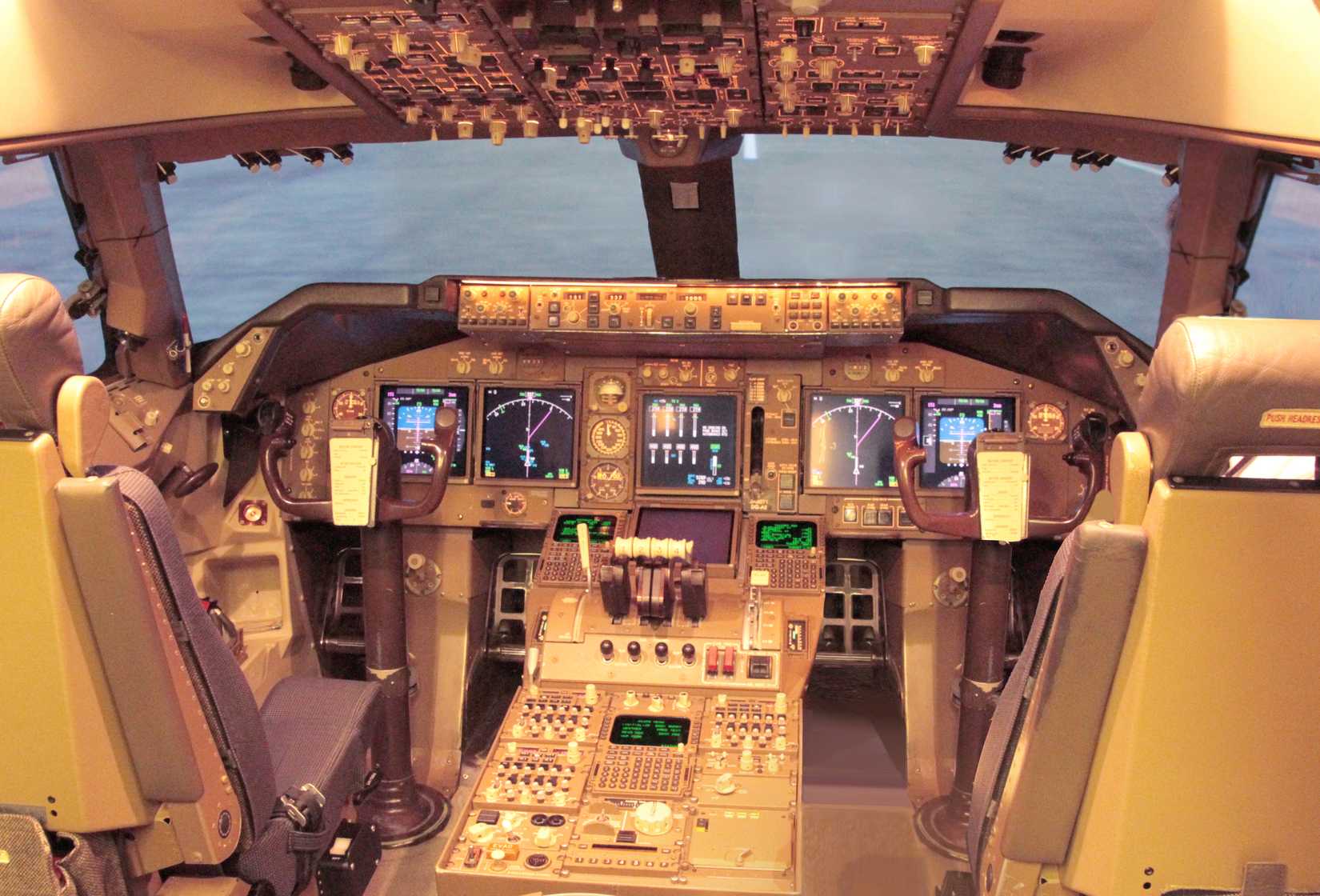
The Boeing 747-400 revolutionized jumbo-jet cockpits, replacing the flight engineer with advanced automation and a two-pilot flight deck.
For almost two decades, operating the Boeing 747 meant having three people on the flight deck. Alongside the captain and first officer, a dedicated flight engineer monitored the jumbo jet's complex systems, managed fuel distribution, checked engine parameters, and ensured its electrical, hydraulic, and pneumatic systems operated correctly. But the introduction of the 747-400 changed this longstanding arrangement, demonstrating that even one of the world's largest commercial aircraft could be operated by just two pilots.
However, the 747-400 was not the first commercial aircraft to adopt a two-pilot cockpit. Boeing 757 and 767 had already demonstrated the advantages of computerized flight decks, while other manufacturers had experimented with similar arrangements on four-engine aircraft. Nevertheless, the 747-400 represented a major milestone in bringing two-pilot operations to the jumbo-jet category. How did Boeing eliminate the flight engineer, what happened to the responsibilities previously assigned to that position, and how did the change influence subsequent generations of commercial aircraft?
When the original Boeing 747 entered commercial service with Pan American World Airways on January 22, 1970, its flight deck reflected late-1960s technology. The aircraft was considerably more complex than previous commercial jetliners, featuring four engines, extensive fuel systems, multiple hydraulic circuits, and sophisticated environmental controls. As a result, Boeing designed the original 747-100 to operate with three flight deck crew members: a captain, a first officer, and a flight engineer. This arrangement continued with the subsequent 747-200 and 747-300 generations.
Boeing's official 747 historical overview identifies these three aircraft as the original Classics generation.
On most aircraft, the flight engineer sat in a dedicated seat behind the two pilots, facing a large instrument panel with hundreds of switches, gauges, indicators, and circuit breakers. While the captain and first officer concentrated on flying, navigation, and communication, the flight engineer monitored the aircraft's technical condition and performed numerous operational tasks. This included checking engine performance, managing fuel transfers between tanks, monitoring electrical generators, maintaining hydraulic pressure, and controlling cabin pressurization.
On a four-engine aircraft as large as the 747, these responsibilities created a considerable workload, especially during departure, cruise, and abnormal operating conditions. The Boeing 747 flight deck historical overview compares the original cockpit arrangement with its modern successor.
Importantly, the flight engineer was not an additional pilot. The position required specialist technical training and a detailed understanding of aircraft systems, allowing the two pilots to concentrate on their primary flying responsibilities. The arrangement was also common across earlier generations of four-engine commercial aircraft, including the Boeing 707 and Douglas DC-8. However, as electronic systems became more sophisticated, aircraft manufacturers began to question whether a dedicated third crew member was still necessary. Boeing's subsequent 757 and 767 programs would answer that question.
The transition toward two-pilot commercial aircraft was already underway when Boeing began developing its 757 and 767 programs. Both aircraft entered service in the early 1980s, introducing advanced digital avionics and electronic flight displays that significantly reduced the need for conventional cockpit instrumentation. The 757 entered commercial service with Eastern Air Lines in January 1983, while the 767 followed later that year. Their integrated systems demonstrated that many functions previously requiring dedicated monitoring could be handled through computerized aircraft equipment.
NASA's historical research into cockpit automation documents the technological changes introduced with the two aircraft, showing that the development was not entirely straightforward.
Boeing initially faced regulatory and industry resistance to operating larger aircraft with only two pilots. The 1981 Presidential Task Force on Aircraft Crew Complement examined whether advanced automation could safely absorb the responsibilities traditionally assigned to flight engineers. Its findings supported two-pilot operations and helped establish the regulatory foundation for aircraft such as the 767. NASA's publication, Human Factors of Advanced Technology Aircraft, explains how Engine Indication and Crew Alerting System (EICAS) technology became central to this transition.
The system was even described as an electronic flight engineer because it could monitor aircraft systems and alert pilots when intervention was necessary.
Contrary to popular belief, the Boeing 747-400 was not the first four-engine jet aircraft certified for two-pilot operation. That distinction belongs to the Lockheed JetStar, the first quadjet designed for two-pilot operation, introduced into service in 1961. Meanwhile, the British Aerospace BAe 146, which first flew in 1981 and entered commercial service in 1983, is recognized as the first commercial passenger quadjet certified for a two-pilot flight deck. Before these developments, four-engine mainline jetliners traditionally required a flight engineer.
Thus, the 747-400 did not invent the concept, but it extended that philosophy to the jumbo-jet market.
First quadjet overall with two-pilot operations
First commercial passenger quadjet certified for two-pilot operations
Established integrated systems monitoring
Extended two-pilot philosophy to the jumbo jet
Boeing already had the technological foundations in place when it decided to modernize its flagship aircraft. However, transferring the concept to the 747 required a much more extensive redesign than simply removing the flight engineer's seat.
The Boeing 747-400 introduced a completely redesigned flight deck that replaced the traditional analog instrumentation with a computerized glass cockpit. Instead of presenting aircraft information through hundreds of individual gauges and switches, the new arrangement consolidated essential data into six cathode-ray tube (CRT) displays. Two primary flight displays and two navigation displays provided the pilots with essential flight information, while the central displays presented engine parameters and aircraft systems information.
According to Airport Technology's technical overview of the 747-400, these displays measured about eight inches by eight inches and incorporated flight control, navigation, engine indication, and crew alerting information.
One of the most striking changes involved the number of instruments and controls in the cockpit. The integrated digital avionics systems reduced the number of flight deck lights, gauges, and switches from approximately 971 on the 747-300 to just 365 on the 747-400. This represented a reduction of more than 60%, illustrating how much information had been consolidated into electronic displays. The Aviamagazine Boeing 747 factsheet documents this transformation.
The aircraft's development also benefited from technology introduced on the 757 and 767. Boeing incorporated integrated avionics, computerized flight management, and more sophisticated monitoring systems, allowing information previously distributed across the flight engineer's panel to be presented directly to the pilots. The 747-400 entered commercial service with Northwest Airlines on February 9, 1989, marking a significant departure from the original jumbo jet's cockpit philosophy.
Boeing-747.com's flight deck history explains how the redesigned cockpit absorbed the functions of the traditional engineering station.
As a result, the working environment for pilots changed substantially. However, the most important question was not how many instruments Boeing removed, but how the aircraft continued performing the responsibilities previously assigned to the third crew member.
Boeing did not transfer every flight engineer responsibility to the captain and first officer. Instead, it redesigned the aircraft's systems so that computers could continuously monitor many operating parameters and present the information requiring attention to the remaining crew members. One of the most important technologies was the Engine Indication and Crew Alerting System (EICAS), which consolidated engine information and aircraft system alerts into electronic displays.
EICAS could identify abnormal conditions and communicate relevant information to both pilots, thus replacing a flight engineer who monitored hundreds of individual instruments.
The flight engineer's traditional responsibilities extended well beyond engine monitoring, and the new automated system had to cover them. The 747-400's integrated systems provided information about fuel distribution, electrical power, hydraulic systems, environmental controls, and other essential aircraft functions. Pilots could access additional system information through dedicated display pages, while alerts helped prioritize conditions requiring their attention. The Boeing 747-400 technical overview describes the integrated avionics architecture, including systems supplied by Rockwell Collins and Honeywell.
In other words, the functions once spread across numerous instruments were consolidated into fewer electronic displays.
Nevertheless, automation did not eliminate the need for pilots to understand the aircraft's technical systems. The captain and first officer remained responsible for monitoring the aircraft, interpreting warnings, and deciding how to respond to abnormal situations. The computers could identify problems and provide information, but they could not replace the judgment required when making operational decisions. This distinction was important because the introduction of advanced avionics also created new human-factor challenges, inc