Qatar’s visitor numbers are recovering on road traffic across the Saudi border, while air arrivals keep falling. Drive-in visitors tend to make shorter trips, which limits how much they can do for hotels.
The roadshow will stop in Burlington, Ajax and Toronto, offering advisors the opportunity to meet with Saint Lucia’s tourism representatives and hotel partners.
Airport authorities have launched an inquiry to ascertain the exact cause of the collapse and are inspecting the structural stability of the surrounding false c
Jet fuel above $4 a gallon has reset the math on every airline plan for 2027. Next week, the executives making those calls spend a full day at the TWA Hotel at JFK.
Cockroach Janta Party (CJP) founder Abhijeet Dipke on Sunday said he had to spend the night at the airport as he waited for a delayed connecting flight on his way back from the anti-SIR stir in Kochi. Dipke attended the CJP's protest against chief election commissioner (CEC) Gyanesh Kumar and allege
A magnitude 5.7 earthquake that struck central Japan at 1:04 a.m. on Sunday, November 8th, caused widespread transport disruption across the Tokai region, with Tokaido Shinkansen services delayed by up to an hour, major JR and private railway lines suspended,…
TROMSO, Norway, Nov 8 : Several fans in the away section of Tromso's stadium fell through a hole in the stand and one person was taken to hospital during their Norwegian top-flight match with Bodo/Glimt on Sunday, both clubs said. The game was stopped just before halftime when Bodo keeper Nikita Ha
Former boxer Adrien Broner had to be carried down a flight of stairs and placed into a wheelchair at a concert last night ... after he was seemingly unresponsive.
A project to convert the country’s traditional kulla houses into guesthouses offers a true flavour of ancient hospitality in a part of the country almost untouched by tourism Sunlight pours through a tiny stone window, causing the wooden floorboards to creak as they warm up. The sound of sheep’s bells filters in from a passing flock.
Learn how to get the most value from your United MileagePlus miles with 10 great award redemptions, including business-class flights and trips to Hawaii.
BHOJPUR: Tourist arrivals in Panchdhara, located in Temkemaiyung Rural Municipality-9 of Bhojpur district, have begun to increase following the construction of a Buddhist stupa aimed at promoting religious tourism and fostering religious harmony. The local go…
The incident occurred after the Air France aircraft reportedly deviated from its assigned departure procedure, prompting air traffic control (ATC) to issue immediate instructions to both flight crews.
The incident occurred at approximately 8.15 a.m. (UTC). Air France Flight AF28 departed at approximately 8.15 a.m. (UTC), followed by American Airlines Flight AA1660 at approximately 8.16 a.m. (UTC).
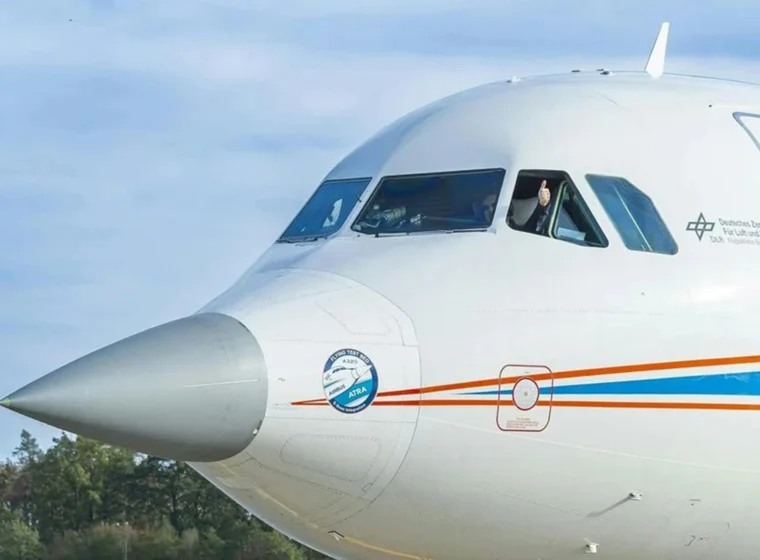
The aircraft involved were a 2.5-year-old Airbus A350-900 registered as F-HUVK, operating Air France flight AF28 to Papeete International Airport (PPT), French Polynesia, and an almost 26-year-old Airbus A321-200 registered as N191UW, operating American Airlines flight AA1660 to Dallas/Fort Worth International Airport (DFW), Texas.
Air France AF28 departed from Runway 24L, while American Airlines AA1660 took off from Runway 25R.According to the available ATC communications, the Air France crew was cleared for take-off under the SUMMR2 Standard Instrument Departure (SID). The procedure required the aircraft to follow its assigned departure routing after take-off.
Shortly after departure, the A350 reportedly initiated an unexpected left turn rather than continuing along the assigned departure procedure. This brought the aircraft towards the departure path of the American Airlines A321.
At the time, the American Airlines crew reported being at 2,000 ft and climbing towards 5,000 ft. Following the developing situation, ATC instructed the crew to maintain 2,000 ft.
Initial reports, citing flight-tracking information, indicated that the two aircraft came within approximately 400 ft (121 meters) of vertical separation.
Air traffic control intervened after identifying the developing situation. The Air France crew was instructed to immediately turn to a heading of 270 degrees. At the same time, American Airlines Flight AA1660 received a traffic alert, with the controller reporting another aircraft at its 12 o’clock position, at a distance of less than one mile.
The American Airlines crew acknowledged the instruction to maintain 2,000 ft and confirmed that it would reduce its climb to comply with the controller’s instruction.
Following the immediate intervention, the Air France crew was instructed to proceed direct to the DART waypoint and resume its climb via the assigned SID.
During subsequent radio communications, the controller questioned the Air France crew about its departure clearance. The pilots eventually confirmed that they had been instructed to fly the SUMMR2 departure.
The controller subsequently advised the crew of a possible pilot deviation and provided a telephone number for further follow-up.
Following the ATC intervention, both aircraft continued towards their respective destinations.
American Airlines Flight AA1660 was subsequently cleared to climb to 17,000 ft, with a speed restriction of 250 knots. The Air France A350 also continued its departure towards Papeete.
No injuries or aircraft damage were reported in connection with the incident.
As of November 8, 2026, no official investigation findings or confirmed explanation for the Air France aircraft’s unexpected turn had been made public. The circumstances surrounding the deviation remain unclear.
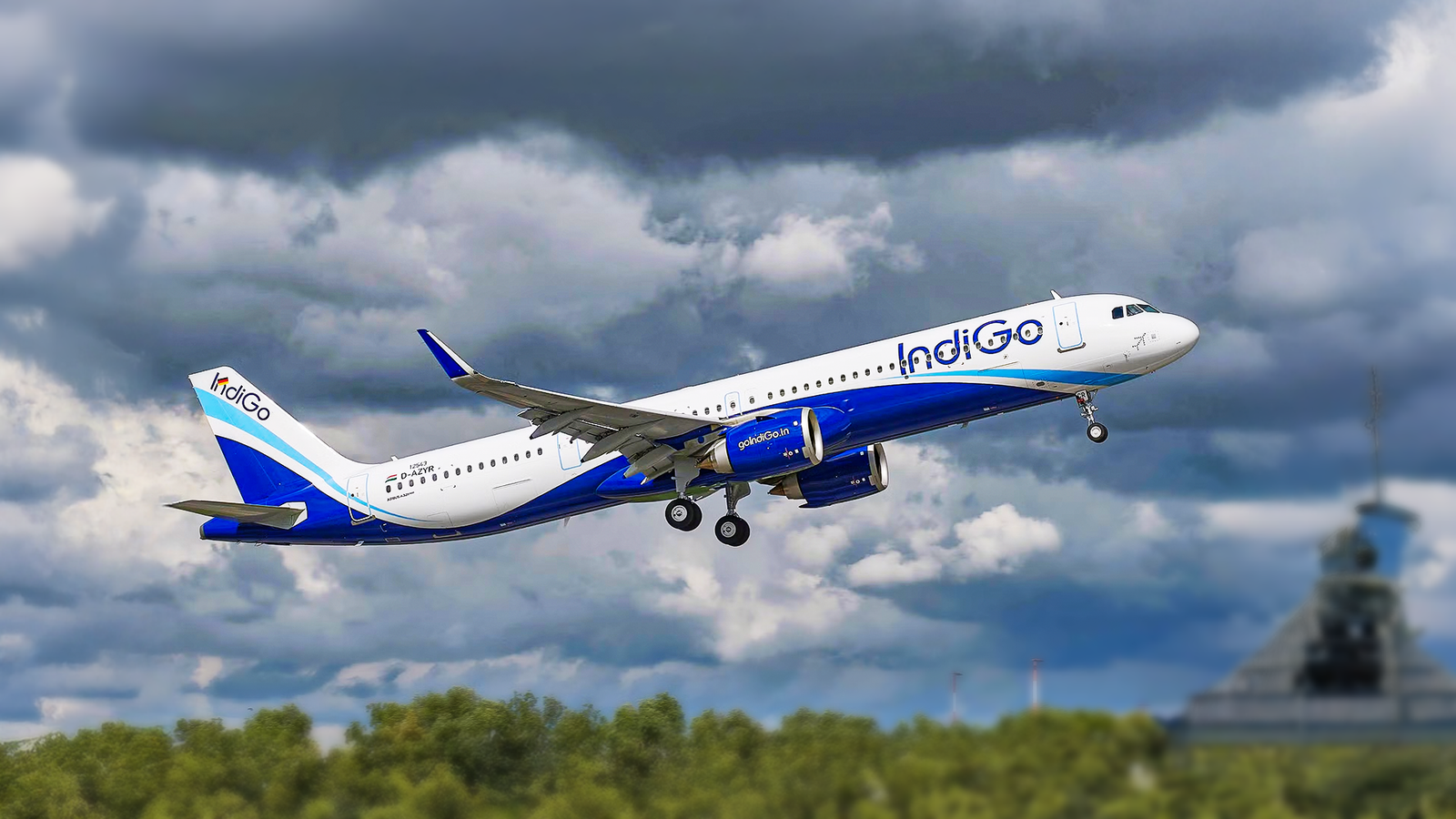
On October 25, IndiGo started operating its flights between Mumbai Airport (BOM) and Amsterdam Schiphol Airport(AMS) with the Airbus A321XLR, replacing the leased Boeing 787-9 Dreamliners previously used on the route. At approximately 3,707 nautical miles (6,865 km), this is now the world's longest scheduled route operated by the A321XLR, with a scheduled flight time of around 10 hours from India to the Netherlands.
However, the actual distance flown is considerably longer due to airspace restrictions across the Middle East and South Asia. Using the Simple Flying Flight Tracker, we examined the routing of flight 22 from Amsterdam to Mumbai on November 1, as well as the flight times recorded during the aircraft's first 11 days on the route. Interestingly, the data shows that although the A321XLR is smaller and generally slower than the Boeing 787-9 Dreamliner, its average flight time to Amsterdam has been shorter.
On November 1, IndiGo flight 22 departed Amsterdam at 2:31 PM local time, operated by an A321XLR registered VT-NLC. According to our flight tracking data, the aircraft spent approximately nine hours and nine minutes in the air before landing in Mumbai at 4:10 AM local time the following morning. Rather than following the shortest possible route toward India, the aircraft followed a more southern trajectory through Europe and the Middle East.
After departing Amsterdam, the aircraft headed southeast across Central Europe before continuing toward Turkey and Iraq. From there, the route passed through the Gulf region and Oman, avoiding Iranian airspace, before continuing toward India's western coast and eventually Mumbai. The tracking data shows how the aircraft avoids both Pakistan and Iran, despite these countries lying along the more direct route between Mumbai and Amsterdam.
The distance between Mumbai and Amsterdam is about 3,707 nautical miles (6,865 km) along the shortest route. However, according to Aerospace Global News, the necessary detours can increase the actual distance flown to approximately 4,200 nautical miles (7,778 km), or around 13% longer. This puts the flight much closer to the A321XLR's advertised maximum range of 4,700 nautical miles (8,704 km).
One of the main reasons for IndiGo's detour is the ongoing closure of Pakistani airspace to Indian airlines, in place since April 2025 following rising tensions between the two countries. According to the International Civil Aviation Organization (ICAO), the restrictions apply to aircraft registered in India, as well as those owned, operated, or leased by Indian carriers. Pakistan has since extended the restrictions several times.
At the same time, the ongoing conflict in the Middle East has also made flying through Iran increasingly difficult. Although Iranian airspace is not subject to the same ban for Indian airlines, the European Union Aviation Safety Agency (EASA) currently advises operators to avoid Iranian airspace at all altitudes.
For IndiGo, Pakistan's restrictions and the security situation in the Middle East considerably reduce available routing options between India and Europe. The airline must therefore follow a longer route, which increases fuel requirements and operating costs. The implications are particularly significant for the A321XLR, as the aircraft has far less flexibility to carry additional fuel and passengers on such a long flight than a widebody such as the Boeing 787-9 previously used on the route.
Although Airbus advertises the A321XLR with a range of up to 4,700 nautical miles (8,704 km), the actual range depends on several operational factors, including passenger weight, cargo, fuel reserves, and weather conditions. The additional distance flown between Mumbai and Amsterdam consequently puts the aircraft much closer to its operational limits. To ensure that the flight can be completed nonstop, IndiGo reportedly restricts the number of seats it makes available for sale.
According to avicionline, IndiGo is currently selling fewer than 140 seats on the Mumbai-Amsterdam leg, despite its A321XLRs having a total capacity of 195 passengers. The aircraft are configured with 12 IndiGoStretch business class seats and another 183 economy class seats, meaning that over 25% of capacity is reportedly unavailable for sale. However, this restriction is not necessarily identical in both directions, as the aircraft's fuel requirements may differ depending on weather and other operating conditions.
Compared with the 787-9 previously operated on the route, this represents a considerable reduction in available capacity. The Norse Atlantic Airways aircraft offered 338 seats, including 56 premium and 282 economy class seats, according to IndiGo's original route announcement. While the A321XLR already has 143 fewer installed seats, additional restrictions on the Mumbai-Amsterdam leg mean almost 200 fewer seats may be available than on the previous widebody operation.
Interestingly, analysis of Flight Tracker data indicates that in the first 11 days of A321XLR operations, the aircraft spent less time in the air on flights from Mumbai to Amsterdam than the Boeing 787-9. Between October 25 and November 4, flight 6E21 recorded an average airborne time of nine hours and 36 minutes, approximately 20 minutes shorter than the average of nine hours and 56 minutes recorded by the 787-9 during its final nine flights.
However, the opposite was true in the other direction: the A321XLR averaged nine hours to fly from Amsterdam to Mumbai, compared with eight hours and 31 minutes for the 787-9.
Looking at the individual flights, the fastest A321XLR service from Mumbai to Amsterdam was recorded on October 28, when VT-NLD completed the journey in nine hours and 19 minutes. The longest was the first flight on October 25, when the same aircraft spent nine hours and 52 minutes in the air. For comparison, the longest 787-9 flight during the period examined took 10 hours and 15 minutes on October 20.
On the return journey, the fastest A321XLR service took eight hours and 32 minutes, while the longest required nine hours and 14 minutes, compared with a range of eight hours and 19 minutes to eight hours and 43 minutes for the 787-9.
However, this does not necessarily mean the A321XLR is operating more efficiently or at higher speeds than the 787-9. The two aircraft were operating at different times of day, with the 787-9 previously scheduled to depart Mumbai at 12:25 PM and Amsterdam at 8:35 PM local time, compared with 6:25 AM and 2:15 PM for the A321XLR. The comparison also covers two different periods around the start of the winter schedule, meaning wind conditions, air traffic restrictions, and the actual routings flown may have differed.
The 787-9 also generally cruises faster than the A321XLR, making it difficult to attribute differences in airborne time to the aircraft types themselves.
According to flight tracking data, IndiGo has already used four different Airbus A321XLRs on its Mumbai–Amsterdam service since October 25. In addition to VT-NLD, this includes VT-NLA, VT-NLB, and VT-NLC, with all four operating at least two flights from Mumbai to Amsterdam during the first 11 days of operations. VT-NLC has been the most frequently used aircraft, completing four services in each direction, while VT-NLD operated three flights to Amsterdam and VT-NLA and VT-NLB operated two each.
Although four aircraft appear in the flight-tracking data, the schedule allows IndiGo to operate both directions with the same aircraft within about 24 hours. On November 1, for example, VT-NLC landed in Amsterdam shortly before noon local time, before departing again at 2:31 PM. This left approximately two hours and 33 minutes between landing and takeoff, after which the aircraft arrived back in Mumbai at 4:10 AM local time the following morning.
The relatively short turnaround times allow IndiGo to operate the daily service without dedicating several aircraft exclusively to the route. Meanwhile, the airline has continued rotating its A321XLRs across other international services, including flights to Athens and Istanbul Airport (IST), where the aircraft type is also being deployed. The Mumbai-Amsterdam route nevertheless represents a considerably longer operation than those services, making it particularly dependent on the aircraft's available range and the routing restrictions currently affecting flights between India and Europe.
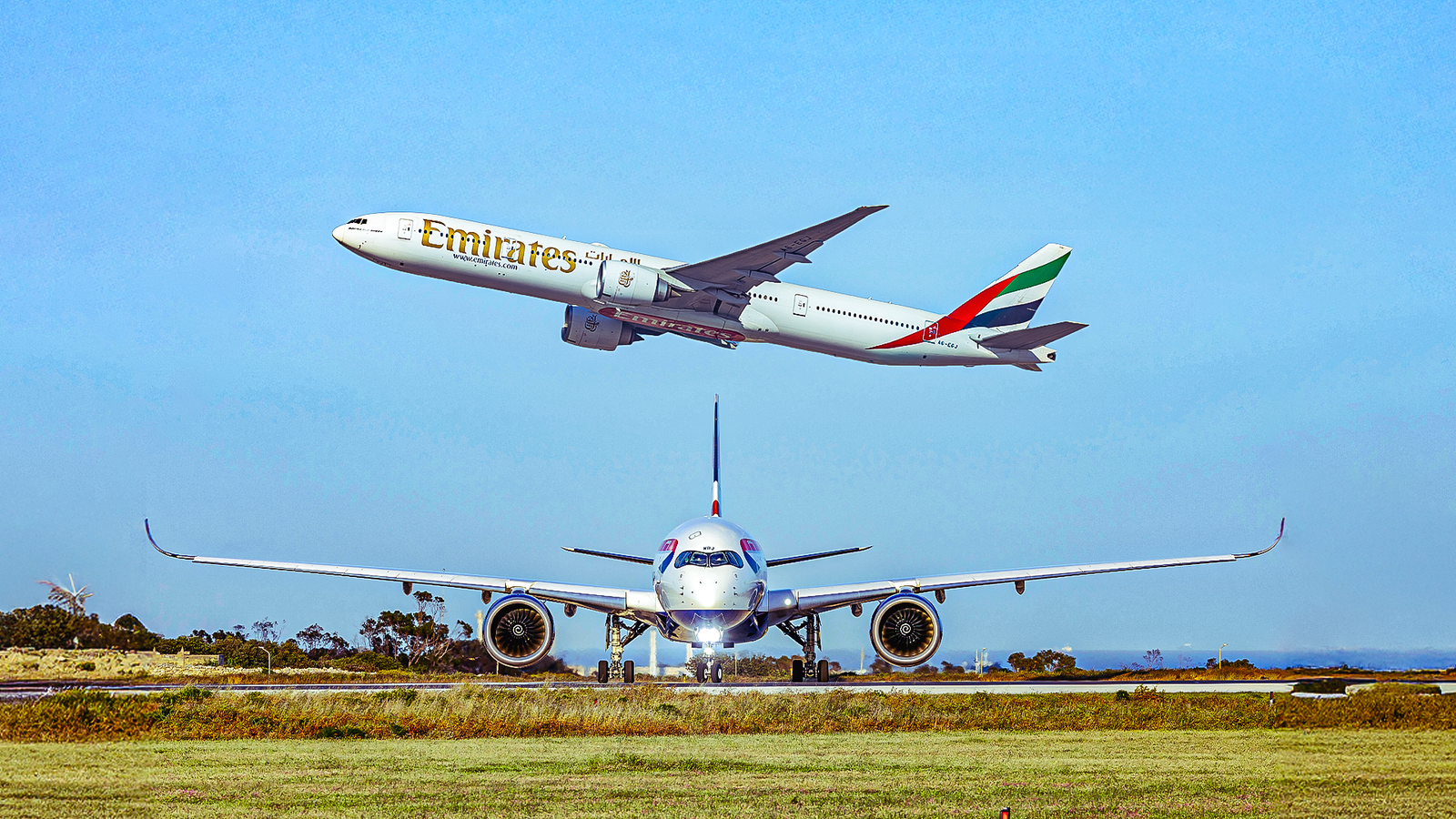
Passengers stepping off a 12-hour flight may feel noticeably better after traveling on an Airbus A350 than after making a similar journey aboard an older Boeing 777. The difference is not simply a matter of seat comfort or airline service. The A350 was designed around a newer cabin environment, incorporating lower pressurization altitude, improved humidity retention, and noise-control measures intended to reduce the physical strain of spending many hours in the air.
These features have a credible scientific basis for mattering, though the evidence requires qualification. No major controlled study has directly compared passenger fatigue after equivalent A350 and 777 flights. Aircraft configuration, airline operating practices, seating density, sleep opportunity, and individual health all influence how travelers feel. Nevertheless, the A350 offers several potential advantages over many earlier 777s, particularly on very long sectors. Those benefits can make the journey less taxing, even though they cannot eliminate jet lag.
One of the A350's most consequential comfort features is its ability to maintain a lower cabin altitude. Although the aircraft may cruise above 35,000 feet, its pressurization system keeps the cabin environment at a much lower equivalent altitude. Airbus specifies a cabin altitude of 6,000 feet (1,828 meters) for the A350, a level made possible in part by its carbon-fiber-reinforced plastic fuselage. Older Boeing 777 variants generally operate within the conventional commercial-aircraft limit of 8,000 feet (2,438 meters) at maximum operating altitude.
This is a regulatory ceiling, not a guarantee that every 777 flight remains at precisely 8,000 feet. Actual cabin altitude changes during a flight and varies with operating conditions. Even so, the potential difference between a 6,000-foot A350 cabin and an 8,000-foot cabin is physiologically meaningful.
A 2007 study published in the New England Journal of Medicine examined 502 volunteers during simulated flights in a controlled hypobaric chamber. Researchers exposed participants to cabin pressures equivalent to altitudes ranging from 650 feet to 8,000 feet. At the highest simulated altitude, average oxygen saturation fell by as much as 4.4 percentage points compared with the lowest condition. Participants also reported more discomfort, including fatigue and muscular discomfort, at 7,000 to 8,000 feet. Those differences emerged after three to nine hours of exposure.
The researchers did not find that the lower oxygen levels caused acute mountain sickness or measurable impairment in sensory and psychomotor testing. Their conclusion was more specific: maintaining a cabin altitude of 6,000 feet or lower could reduce passenger discomfort on long flights. This supports the A350's approach, but it does not prove that every traveler will arrive less tired or that the aircraft prevents fatigue. Pressurization performance varies by generation and operating conditions.
Nevertheless, the A350's lower target gives it a tangible advantage in an area where scientific research has established a relationship between cabin altitude and passenger discomfort.
Cabin humidity is another factor that can influence how comfortable passengers feel after a long flight. The air supplied to aircraft cabins at cruising altitude is extremely dry. Relative humidity on many long-haul flights commonly falls between 10% and 20%, well below levels people experience indoors on the ground. Low humidity does not normally cause clinically significant dehydration in healthy passengers. It can, however, dry the eyes, nose, throat, and skin, making a long journey feel less comfortable. Increasing cabin humidity improved nasal comfort while reducing ocular, nasal, and skin symptoms.
The A350's composite fuselage helps address an engineering constraint behind cabin humidity. Traditional aluminum structures are more vulnerable to corrosion when exposed to sustained moisture, so aircraft manufacturers have historically limited humidity to reduce the risk of condensation and structural deterioration. Composite materials are less susceptible to that form of corrosion, giving designers greater flexibility to manage moisture levels.
Airbus says the A350 combines its carbon-fiber structure with improved humidity levels during cruise, contributing to lower passenger fatigue. Independent aviation-health research also notes that newer composite aircraft, including the A350 and Boeing 787, can retain more moisture than older designs. Cruise humidity around 15% has been reported in some cases. This does not mean every A350 cabin remains at 15% to 20% throughout a flight. Humidity varies with passenger numbers, ventilation rates, and operating conditions, and it is not routinely monitored in commercial cabins.
Passengers may notice fewer dry-eye symptoms or less irritation after many hours, particularly when improved moisture retention accompanies lower cabin altitude. Humidity alone is unlikely to determine whether someone arrives exhausted, but it can remove one source of discomfort that becomes more noticeable as flight time increases.
Noise is less straightforward to compare because measurements depend on where they are taken, which engines power the aircraft, the phase of flight, and the seating area. Airbus describes the A350 as the quietest aircraft in its category and says its noise-optimized airframe and engine nacelles can make it up to nine decibels quieter than competing aircraft. The Rolls-Royce Trent XWB engines, aerodynamic design, and cabin insulation contribute to its acoustic environment.
Independent measurements offer a more restrained picture. Researchers found that the differences between the several widebody aircraft measured were relatively small, within approximately three decibels. The A350 was not the quietest aircraft in that particular sample, with the Airbus A380 recording the lowest levels. These findings show why manufacturer comparisons should not be interpreted as a universal passenger experience. Even small reductions in background noise can help on a long flight.
A steadier acoustic environment may make it easier to read, relax, or sleep, especially for passengers sensitive to engine noise or cabin activity. Noise also interacts with other conditions: someone in a quiet business-class suite may rest better than a traveler seated near a galley, regardless of aircraft type.
The A350's cabin environment does not make it superior in every aspect of passenger comfort. The 777 has a slightly wider fuselage. That extra space can matter, especially in economy class, where airlines decide how to divide the cabin among seats, aisles, and sidewalls. Seat width depends heavily on the carrier's layout, as the 777 can be configured with nine seats across in economy or with ten seats across. The same principle applies to the A350, where a common ten-abreast economy arrangement can reduce individual seat width.
Overall, aircraft dimensions therefore do not tell passengers exactly how much personal space they will receive.
Singapore Airlines provides a useful illustration of how the comparison changes by cabin. Its 777-300ER economy layout can offer wider seats than its A350-900, making the larger Boeing a potentially better choice for travelers who prioritize shoulder room. Yet the A350 may be preferable for passengers who value a lower cabin altitude, a more modern acoustic environment, and potentially less dryness on long sectors. The airline's actual seat map and aircraft assignment matter more than a simple manufacturer-versus-manufacturer ranking.
Premium cabins introduce further variables. Seat design, privacy, bedding, service standards, and the ability to lie flat can have a greater effect on rest than small differences in cabin pressure or noise. A well-designed 777 business-class seat may be more comfortable than a poorly configured A350 cabin, while a spacious A350 suite can make the journey feel substantially easier. Passengers should compare the specific airline product rather than assuming that the aircraft model alone determines comfort.
The aircraft provides the physical environment, but airlines determine many of the conditions passengers experience within it. Cabin temperature, lighting schedules, meal timing, service interruptions, seating density, and crew procedures can all influence rest. An A350 operated with bright cabin lighting during intended sleep hours or frequent service interruptions may offer less restorative rest than a carefully managed 777 flight. Passenger circumstances, including sleep before travel, departure time, stress, and seat location, also shape how travelers feel on arrival.
Someone seated beside a busy galley may experience more disruption than a passenger in a quieter window seat.
For travelers choosing between comparable flights, the A350 may provide a more favorable environment for a long journey. However, aircraft substitutions and differences in airline configurations make it worth checking the scheduled aircraft and seat map before departure. It is also necessary to distinguish general travel fatigue from jet lag, which occurs when the body's internal clock falls out of alignment with local time after crossing time zones.
The A350's advantage over older 777s may also become less pronounced as Boeing introduces the 777X. The forthcoming aircraft family is being designed with a quieter cabin, improved humidity, cleaner air, and other passenger-focused upgrades. However, Boeing's often-cited 6,000-foot cabin altitude figure currently applies to its BBJ 777X business-jet offering at maximum cruise altitude. It should not automatically be treated as the confirmed specification for every future commercial 777X configuration.
Ultimately, passengers may arrive feeling less tired after flying on an A350 than on an older 777, particularly when flights are similar in duration, schedule, and cabin class. The strongest ev
The November 7 decision affects agreements covering seven passenger check-in counters, an airport car park and a taxi office. The contracts were held by Sky Plus, Sama Al-Matar and Al-Faisal Al-Shamikh, respectively. Iraqi authorities have not identified the armed groups allegedly connected to the companies or published evidence supporting the claims.
According to contract documents obtained by Shafaq News, all three leases were signed by the Iraqi Airports Administration on behalf of the Transport Ministry. Each agreement covered an initial three-year period, with an option for renewal.
Sky Plus, registered in the United Arab Emirates, leased seven check-in counters covering 42 square metres in the passenger terminal. Sama Al-Matar secured a lease for an uncovered parking area spanning 4,228 square metres, while Basra-based Al-Faisal Al-Shamikh was contracted to operate a four-square-metre taxi office in the arrivals hall.
The decision also follows a dispute over how the agreements were awarded. Nineveh Governor Abdul Qader al-Dakhil said the Transport Ministry and airport administration had concluded the contracts without consulting provincial authorities. He told local media that he had taken legal action against former Transport Minister Razzaq Muhaibis al-Saadawi and the airport administration over the agreements.
Alongside the cancellations, al-Zaidi instructed officials to accelerate plans for specialised international companies to participate in operating and jointly managing Mosul International Airport. The prime minister had previously invited foreign airport operators to invest in the facility during a visit to Mosul on October 12.
No replacement companies have been announced yet, and the government has not provided a timetable for transferring the three services or selecting an international airport management partner.
Mosul International Airport was heavily damaged after Islamic State militants seized the city in June 2014. Reconstruction began in August 2022, with the rebuilt facility officially inaugurated on July 16, 2025, by former Prime Minister Mohammed Shia al-Sudani.
Commercial passenger operations returned later that year. On November 6, 2025, Iraqi Airways operated the first passenger flight between Mosul and Baghdad after an 11-year interruption. The reconstructed airport features a 3,000-metre runway and terminal infrastructure designed to accommodate up to 630,000 passengers annually.
LYVGO Atlas illustration — original artwork, not publisher photography.
Most widely reported
1
Portion of false ceiling collapses outside Mumbai airport terminal, one hurt
newindianexpress.com
3 outlets reporting
2
Blue Angels pilot Scott Laux booted from elite Navy flight team for ‘failing to uphold standards’
nypost.com
2 outlets reporting
Every item above is summarised from the source named beside it.
Air France A350 departure deviation brings it close to American A321 at LAX
Confirmed
An Air France Airbus A350-900 and an American Airlines Airbus A321-200 were involved in a near-mid-air collision shortly….
Not yet confirmed
Reported by one outlet so far — not yet corroborated by another.
Today's list
Cut Flight Costs This Season
Looking for ways to save on flights without sacrificing comfort? From simple habits to clever tools, we've got you covered.
1
Clear Your Cookies
Many airlines and online travel agencies use cookies to track your browsing history and raise prices if they see you're interested in a specific route. Clearing your cookies can help you avoid this price hike.
2
Use Budget Airlines' Error Fares
Keep an eye on budget airlines' websites for mistake fares, which can be significantly cheaper than usual. Be quick, though - these fares are usually only available for a short time.
3
Fly at Off-Peak Times
Flights that depart early in the morning or late at night are often cheaper than those that take off during peak hours. Just be aware of any travel restrictions or limited services.
4
Pack Light
Check-in baggage fees can add up quickly. Packing light can save you money and make your journey smoother.
5
Use a VPN
Some airlines and online travel agencies offer different prices based on your location. Using a VPN can help you access cheaper fares.
6
Book on the Right Day
Some studies suggest that booking flights on certain days of the week or at specific times can lead to cheaper fares. Experiment to find what works best for you.
7
Use a Price Tracker
Tools like Google Flights or Skyscanner allow you to track price drops and alerts you when your desired route becomes cheaper.
Jet fuel above $4 a gallon has reset the math on every airline plan for 2027. Next week, the executives making those calls spend a full day at the TWA Hotel at JFK.
Here is how to spend yours, by role. JetBlue President Marty St. George said this week that airline pricing has yet to find its equilibrium as costs keep climbing. On Wednesday, November 11, he takes the stage in conversation with Brian Sumers, Editor of The Airline Observer. His session closes out Skift Commerce Summit and kicks off Skift Aviation Forum 2026, which brings the executives setting 2027 plans to the TWA Hotel at JFK the next day.
Skift Aviation Forum 2026 convenes at the TWA Hotel at JFK on November 12, preceded by Skift Commerce Summit on November 11 at Apella by Alexandria, with a program built around one condition: jet fuel prices doubled in 2026 and airlines have not yet found a fare level that covers the increase.
What happened
You make the decisions.... Jet fuel prices doubled in 2026, and JetBlue President Marty St.
The detail
Network and fleet leaders get Breeze Airways' David Neeleman on growth and mergers, Embraer's Arjan Meijer and Porter's Kevin Jackson on whether smaller jets ease a delivery-slot squeeze running to roughly 2033, and Airbus North America's Robin Hayes. Loyalty and distribution sessions address programs now worth more than the airlines that own them and AI shopping tools that compare every program in seconds, with Agoda's Damien Pfirsch, Delta, Allianz Partners, Flying Blue, and oneworld.
Local impactFollow how this story develops and what it means for you.
Source: How to Plan Your Day at Skift Aviation Forum 2026 (skift.com) · Nov 6, 2026
What to do next
Read more about this topic on LYVGO.
See related stories from the same desk.
Follow this developing story for the latest updates.
Comments
Add your read on the story. Keep it civil and on the story.
Air France A350 departure deviation brings it close to American A321 at LAX | LYVGO