




























Since advanced composite materials arrived on the scene, they have completely revolutionized modern widebody manufacturing by drastically reducing structural weight and maximizing fuel efficiency. Carbon-fiber-reinforced polymers form the foundation of both the Boeing 787 and the Airbus A350, however, the physical execution of these airframes represents a massive philosophical divide between the world's primary aerospace manufacturers.
This guide details why Airbus opted for a panelized fuselage assembly rather than matching the continuous wound composite barrels chosen by Boeing, giving readers an in-depth look at how these competing philosophies shape aircraft manufacturing and airline operations.
What happened
The origins of this engineering standoff date back nearly two decades, when Airbus initially attempted to challenge the newly announced 787 with a conventional aluminum-lithium update to its legacy widebody platform. Intense market pressure and critical feedback from major global airlines forced the European manufacturer to scrap its initial plans and invest in a completely clean-sheet, extra-widebody design.
The detail
Selecting a complex architecture of individual carbon panels fastened to a metallic frame grid meant Airbus systematically mitigated the immense industrial risks and circular geometric limitations that plagued its American rival. This massive decision continues to influence production scaling, ramp repairability, and lifecycle fleet economics across the global aviation industry today.
The wider picture
The shape of a modern widebody aircraft fuselage directly dictates passenger comfort and airline seating capacity in more ways than you might expect. Choosing how to manufacture a composite fuselage means the physical geometry of the cabin and the mechanical limitations of manufacturing machinery need to have some kind of middle ground. Boeing opted for a series of continuous cylindrical barrels to form the hull of its twin-engine widebody, and Airbus developed an entirely different structural approach based on longitudinal panel assembly.
What comes next
The engineering divergence stems directly from the mechanical constraints of using a rotating mandrel to wind carbon fiber tape. A winding mandrel must spin continuously along a centralized axis to apply composite layers uniformly, so it naturally generates a perfectly circular cross-section. Boeing embraced this cylindrical geometry for its single-barrel architecture, optimizing the production for pure aerodynamic symmetry but locking the internal cabin into a rigid circle.
Additional context
Airbus engineers, however, wanted to maximize individual passenger space at the shoulder level, a design requirement that demanded a non-circular, egg-shaped cross-section. Constructing an ovoid hull is mathematically and industrially impossible using a solid rotating barrel mandrel, which forced the European manufacturer to abandon monolithic cylinders in favor of four distinct panels joined together.
Analysis
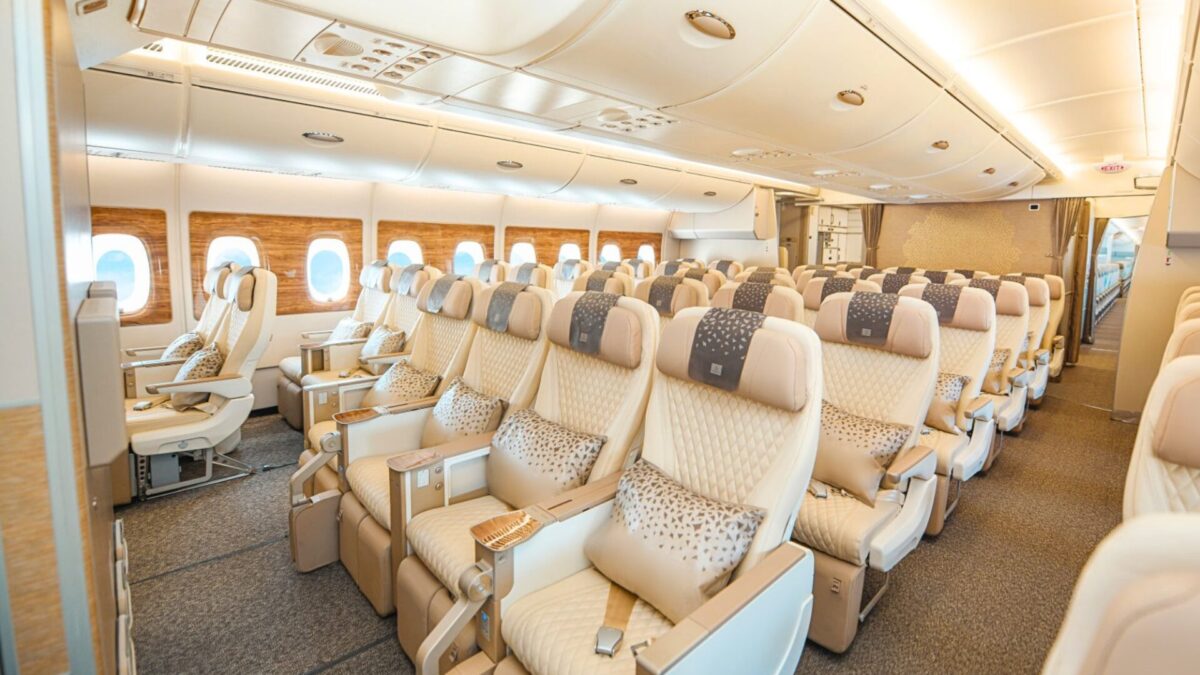
The real-world benefit of this ovoid configuration becomes instantly clear when analyzing the internal dimensions of the extra-widebody cabin. The panelized architecture allows the cabin walls to curve outward more aggressively near the eye line of a seated traveler, providing an extra five inches (12. This dimensional freedom allows airlines to comfortably install nine-abreast economy seating arrays without pinching passenger shoulder room or restricting aisle passage.
Reactions
In short, the design team successfully optimized the structural layout for human ergonomics rather than bending the cabin space to fit the tooling limits of a factory floor.
Developments
Operating a massive widebody airliner across long-haul networks exposes the airframe hull to highly uneven structural forces during different phases of flight. A pressurized fuselage does not experience aerodynamic tension equally around its circumference, meaning that a uniform material distribution inevitably results in dead weight. Recognizing these localized loading variances, engineering teams at Airbus designed a structural grid that adapts precisely to the specific mechanical stresses felt by different zones of the airframe.
Developments · 2
The top crown panel primarily withstands heavy longitudinal tension forces during flight, whereas the bottom keel panel must endure severe compression loads, runway debris impacts, and localized landing gear stresses. A solid wound barrel forces a relatively uniform layer distribution around its entire diameter, creating parasitic weight penalties in areas where high strength is completely unnecessary.
Developments · 3
The idea was to split the fuselage into four distinct longitudinal segments: the crown, the keel, and two side walls, and designers continuously varied the composite ply depth to shed hundreds of pounds of excess structural mass.
Developments · 4
The hyper-localized material optimization significantly lowers the overall operating empty weight of the entire platform. Minimizing empty weight translates directly into a permanent reduction in fuel burn, providing operators with lower trip expenses over decades of continuous commercial service. Additionally, Airbus is integrating these targeted carbon panels with an internal skeleton made of advanced aluminum-lithium alloys, creating a hybrid frame that blocks corrosion while providing immense rigidity.
Developments · 5
Using this precise material pairing makes the airframe remarkably resilient against fatigue, allowing airlines to extend their major structural maintenance intervals out to 12 years.
Developments · 6
Turning an idea for groundbreaking aircraft design into full-scale industrial production is much more difficult in practice than it is on paper. The aerospace sector is filled with advanced concepts that have suffered catastrophic financial losses due to unexpected assembly line bottlenecks and tight component tolerances. Carefully analyzing the early production hurdles faced by composite programs like the 787, the Airbus assembly teams structured their manufacturing process to bypass complex structural alignment crises entirely.
Developments · 7
The main industrial vulnerability of joining massive, solid composite cylinders like those on the Dreamliner involves the absolute lack of mechanical flexibility during the mating process. When global suppliers shipped completed Boeing barrel rings to a centralized assembly line, microscopic manufacturing variances often led to tiny, out-of-spec gaps at the circular joint interfaces. Resolving these rather minute structural imperfections necessitated the manual installation of thousands of customized carbon shims, which paralyzed the American assembly line and delayed deliveries for months.
Developments · 8
To completely eliminate this shimming bottleneck, the alternative Airbus design relies on adjustable longitudinal lap joints where the four A350 panels overlap over the internal metallic frames. It helps to accommodate minor variations easily, allowing factory technicians to rivet the skin segments together rapidly without halting the entire production flow.
Developments · 9
A single-barrel construction technically uses fewer individual fasteners, but the absolute rigidity of the manufacturing process introduces immense systemic risks if a single global supplier suffers a tooling calibration error. Utilizing a panelized assembly line allowed the European planemaker to secure a highly predictable production ramp-up from day one, which has also been crucial in the increased production rates over recent years.
Developments · 10
When looking a bit closer into the economics of expanding an aircraft family, a massive structural divergence between panelized assemblies and continuous wound composite barrels becomes glaringly apparent.
Local impactFollow how this story develops and what it means for you.
Source: Why Airbus Chose Carbon Fiber For The A350's Fuselage When Boeing Used Composite Barrels On The 787 (simpleflying.com) · Oct 23, 2026
What to do next
- Read more about this topic on LYVGO.
- See related stories from the same desk.
- Follow this developing story for the latest updates.
Comments