Luxury hotels that rely on long-haul, high spending guests have been hit by Middle East unrest while their budget and midscale counterparts have fared better with a broader mix of arrivals.
Travelers do not separate a connectivity failure from the rest of their trip. Airlines, hotels, platforms, and connectivity providers must build reliable access into the journey before AI raises the stakes.
PS has built one of the more defensible businesses in premium travel on a 90-minute window and nearly a decade of regulatory groundwork. For hotels, lounges, and clubs chasing the same customer, the lesson is that protecting a guest's attention can be worth more than monetizing it.
More aircraft, more destinations and more opportunities for agents – they’re all on the horizon. At Porter’s 20th anniversary bash, Travelweek sat down with President Kevin Jackson and CCO Eddy Eldebs to find out what's next for the airline.
With 41% of travelers still price-checking after they book, the hotel and flight reservations are now only one part of a longer, more dynamic — and more provisional — process.
One of many takeaway stats from yesterday’s Virtuoso On Tour: ADRs for Virtuoso preferred hotel partners hit a high of US$1,970 per night in June 2026.
Amex Platinum adds Airbnb bookings and new lodging credits, but starting in 2027, all hotel credit redemptions will require stays of at least two nights.
Malaysia’s 47 million target was out of reach before the haze arrived; the year-end damage now depends on whether travelers rule out more than the worst-hit areas.
Time Out's ranking for 2026 lists the most impressive bus, train and tram networks around the world - with Asia's state-of-the-art city networks faring particularly well.
On paper, Airbnb's exclusive short-term rental partnership with Amex Travel didn't change anything for Expedia because it wasn't supplying vacation rentals to Amex Travel. But Expedia's Vrbo has begun supplying vacation rentals to other B2B partners, and now the Airbnb deal blocks that potential expansion.
Sydney’s second airport is named after the first Australian woman licensed to fly paying passengers. But who was the ‘Angel in the Outback’, Nancy-Bird Walton?
The Super 8 and La Quinta franchiser is opening its inventory to Meta's Muse, OpenAI, and Instinct. Morgan Stanley analysts think AI agents could cost hotel groups less per booking than online travel agencies do.
New York is ending one of its most iconic tourist attractions. Pedicabs have been floated as an alternative, but lawmakers say that industry has its own issues.
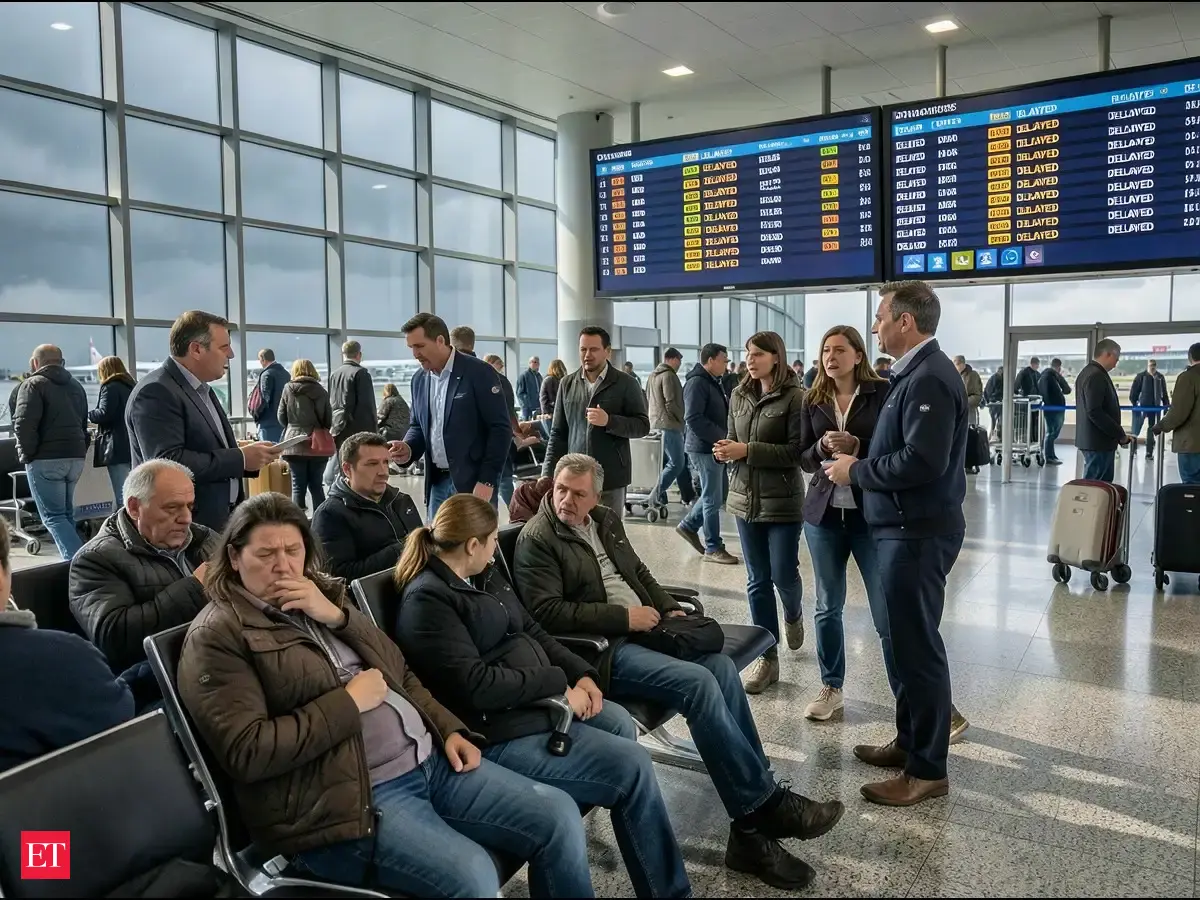
Flight interruptions have gripped the United States as severe weather affects several key airports. Gusty winds in Boston and New York have led to extensive delays, while thunderstorms in Phoenix and downpours in California have caused further operational cha…
Nagpur’s Itwari station passengers cite train delays, porter shortage and entry-exit congestion at Rail Jan Samvad; SECR says fixes and crowd control underway.
From cosy Alpine villages to queue-free skiing, you tell us where to head to avoid the crowds • Tell us about a conservation tourism experience – the best tip wins a £200 holiday voucher Bad Gastein is a relatively unknown gem. The Austrian state it sits in, Salzburg, offers free local transport (the guest mobility ticket ) if you are staying
With passenger traffic heading toward twice today's levels and little room for new runways, airports are connecting people, processes and technology into a single operating picture. CUPERTINO, Calif., Oct.
The airline has showcased its commitment to collaboration and open communication in the aviation industry, with a focus on building a more resilient and harmonious global aviation ecosystem.
Hotel operators in the UAE are relying on travelers from short-haul markets such as India, China and Russia to support their recovery from the worst impacts of the U.S.-Iran war, as higher airfares continue to keep away some long-haul guests.
“We’re targeting short-haul markets like India, China, and Russia, that are a five- to six-hour flight away,” said Saurabh Tiwari, vice president for the Middle East, Maldives and Sri Lanka at IHCL, which operates the Taj brand. “Since jet fuel prices are more expensive than before, it is hard to expect people to come from long-haul markets like the Americas or Australia. Attracting visitors from long-haul [markets] is going to be wishful thinking.”
India has been IHCL’s most reliable source market through the crisis, Tiwari said, because of its accessibility and lower flight prices compared to long-haul destinations. At the same time, cheaper rooms are now making Dubai more affordable to travelers who previousl
Subscribe now for complete access to Skift.com’s trusted coverage of the travel industry.
Enter your email for a complimentary article + exclusive offers.
Tags: abu dhabi, dubai, hotels, short term rentals, uae, unrest
This sponsored content was created in collaboration with a Skift partner.
A traveler lands in a new country and reaches for a phone. The boarding pass, hotel address, ride-hailing app, maps, payment tools, and messages all live there, and every one of them assumes a working connection.
Without a reliable connection, even routine parts of the journey can become challenging. A hotel may lose contact with an arriving guest, a ride-hailing service may be unable to connect a passenger with a driver, and an airline’s digital services may become inaccessible at a critical moment.
That was the central challenge that Richard Trinder, senior director of strategic partnerships at Holafly, an travel eSIM provider, discussed with Dan Marcec, intelligence editor at Skift, at Skift Global Forum 2026. No single travel company controls the entire journey, yet a connectivity failure can affect the experience travelers associate with every brand involved. For Trinder, addressing that vulnerability requires closer partnerships and making connectivity part of the travel experience from the outset.
“The smartphone has increasingly become the control center of our lives,” Trinder said. It holds boarding passes, payment tools, maps, messages, and, increasingly, digital identity documents. When the phone cannot connect, much of the trip can become inaccessible at once. With a boarding pass on the phone, he said, losing connectivity is “a crisis.”
The growing dependence on smartphones has also changed travelers’ expectations. Trinder pointed out that consumers have spent decades getting accustomed to seamless, on-demand digital experiences. They now expect the same reliability when traveling, even as they move between countries, networks, and service providers.
Those transitions are particularly vulnerable. Trinder highlighted international border crossings, where changes in connectivity zones can interrupt service, and airport Wi-Fi, which can be patchy, insecure, and susceptible to cyberattacks. The consequences become more serious when travelers need to retrieve information or communicate during a disruption.
As Marcec pointed out, a hotel has no control over an airport’s connectivity failure, but it still faces the consequences when a guest cannot communicate with the hotel. Trinder warned that these breakdowns can affect customer satisfaction, brand perception, loyalty, and the likelihood of a repeat purchase.
“Today, the consumer has zero tolerance for friction,” he said.
Marcec compared connectivity to basic hotel amenities like clean water and air conditioning: Travelers expect them to work and only notice when they don’t. Trinder agreed that connectivity has become a basic need, “just like the air we breathe and the water we drink.”
At Holafly, that thinking informs a company-wide emphasis on traveler peace of mind. He described it as providing travelers with a sense of confidence, security, and safety by anticipating connectivity issues before they arise.
The stakes can be personal as well as practical. Trinder described a business traveler facing a deadline or someone who needs to reach family with an urgent message. In either case, the inability to connect can turn an already stressful situation into something more serious.
His argument was that travel companies should make every effort to pre-empt these moments rather than leave customers to solve connectivity problems themselves. A relatively small part of the overall travel purchase can have a disproportionate effect on the experience when something goes wrong.
Delivering that peace of mind requires coordination across companies that may otherwise have little to do with one another. Airlines, hotels, booking platforms, and connectivity providers each control different parts of the experience, while travelers increasingly expect those services to work together.
Marcec connected the discussion to a broader theme at Skift Global Forum: Travel companies, including Uber and Airbnb, are looking for ways to take greater ownership of the customer experience. But even as companies expand their reach, they remain dependent on services outside their control.
“No one travel provider or travel company in this room owns the journey end-to-end completely,” Trinder said. “We have to partner up.”
For Holafly, that means changing how connectivity is sold and delivered. Rather than treating an eSIM as a separate purchase, Trinder wants travel brands to incorporate connectivity directly into their booking processes and digital services.
“We’re trying to move away from a reseller or vendor mentality and absolutely integrate it into the buying flow of how a journey happens,” he said.
Through application programming interfaces and software development kits, connectivity can sit within a partner’s app and purchasing flow rather than appearing as a separate product later. The case for doing so is practical: brands have already invested in their apps, and they don’t get the full value from them when a connection breaks.
Trinder pointed to maritime travel as one opportunity for this approach. Passengers at sea can move between connectivity zones or experience service blackouts, creating challenges that a travel provider may struggle to address alone. With coverage across more than 200 destinations, Holafly sees opportunities to work with global travel companies to reduce those interruptions.
But Trinder emphasized that technical integration alone will not solve the problem. He pointed to joint business plans as a way for companies to agree on shared objectives, responsibilities, and measures of success. Those measures can include ancillary revenue and other economic benefits alongside improvements to the traveler experience.
He also returned to a theme raised elsewhere at the forum: the importance of human intelligence as companies adopt more sophisticated technology.
“We need humans to talk to each other in companies,” Trinder said. Partnerships can take multiple forms, and coordinating them requires people to work through the behind-the-scenes complexity so travelers don’t have to.
The importance of maintaining access becomes particularly clear when a trip does not go according to plan. A delayed connection, unexpected layover, or disruption caused by severe weather or geopolitical events can leave travelers needing information and assistance at precisely the moment their connectivity is most vulnerable.
Trinder offered Holafly’s Always On as an example of how connectivity providers can help address that problem. He described the product as a foundational layer of data that remains available for emergencies, with a particular focus on business travelers.
The idea is to ensure that travelers retain enough connectivity to handle essential tasks when their plans change unexpectedly. As Trinder explained, the value lies in knowing that a traveler can still access data when something goes wrong, without having to address a new connectivity problem in the middle of a disruption.
“Always On will give you that peace of mind that you’re okay,” he said. “You can do the emergency things you need to do.”
The conversation also raised a longer-term question: What happens as travel companies build more of the customer experience around AI-powered services?
Marcec pointed out that the industry is investing in agentic AI and digital customer service, but those tools still depend on travelers being connected. Without reliable access, even the most sophisticated digital services may be unavailable when customers need them.
Trinder argued that companies should prepare by integrating connectivity into their existing services and purchasing flows now. While the implications of agentic AI are still taking shape, he sees app
Want to bookmark your favourite articles and stories to read or reference later? Start your Independent Membership today.
Travellers will gain stronger passenger rights in Europe next year as new EU rules require faster refunds on cancelled flights and free plane seats for companions.
The European Union (EU) Parliament gave the green light on Tuesday, 20 October, to update rules that will strengthen the protection of passenger rights across all modes of transport.
EU passenger rights rules apply to any passenger travelling by air, rail, ship, bus and coach across the EU, regardless of their nationality or citizenship.
The Parliament voted almost unanimously in favour (652 votes) of the regulation, with two votes against and eight abstentions.
The updated rules will take effect from 23 October 2027 after the European Council formally approves the regulation.
The new rules tighten the time limit for travellers to receive refunds on cancelled flights booked through intermediaries, such as a travel agent or a booking platform.
Passengers are now entitled to receive a full refund, including intermediary fees, within 14 days of their flight being cancelled.
The airline must transfer the payment to the intermediary within a maximum of seven days, and the intermediary must transfer it to the passenger within a further seven days.
Intermediaries must also make it clear to passengers at the time of booking how the reimbursement arrangements work.
If passengers book directly with an airline, they should receive a refund within seven days, although this rule has long been in place, whereas the updated rules relate specifically to intermediary bookings.
Under the new rules, the EU has also made it clearer and easier for passengers to submit claims for reimbursement or compensation by using a standardised form.
The form will be available on the European Commission’s website in all languages and for all types of travel, or carriers can provide an equivalent form.
The third update centred around improved rights for vulnerable passengers.
People with disabilities or reduced mobility can now bring an accompanying person on a flight free of charge “if their presence is necessary”.
This is already the case for travel by bus, train or ship, but airlines will now have to implement this rule.
The final new regulation relates to enforcing passenger rights rules. The EU said national authorities will be given enhanced powers for investigating possible breaches of passenger rights.
They will be able to proactively initiate audits, inspections or interviews of carriers, not only after receiving passenger complaints.
Italian MEP and member of the Committee on Transport and Tourism Matteo Ricci said this regulation is “prioritising the rights of our citizens over the profits of airlines”.
He added: “Travelling is part of our lives. Whether we catch a train to work, a bus for a trip, a plane to return home, or a ferry for holiday, we all share these journeys as passengers. This legislation will improve the protection these travellers receive.”
Read more: Cancelled or delayed flights – what are my rights to a refund?
Join thought-provoking conversations, follow other Independent readers and see their replies
Quick summaryAmerican Airlines' checked baggage fees vary by route, fare type and elite status, with specific rules for domestic and international flights.All passengers are allowed one carry-on bag and one personal item at no extra cost, regardless of fare type.Overweight and oversized bags incur additional charges, and certain sports equipment may have separate fees or restrictions.Travelers can avoid checked bag fees through elite status, premium cabin tickets or by using select travel rewards cards that offer statement credits.
What to considerChecked bag allowances and fees differ by destination, with stricter limits and higher fees for some international routes and oversized items.Elite status and premium cabin tickets provide increased free baggage allowances, but benefits from status and travel cards cannot be combined.Some sports equipment, like scuba tanks and windsurfing gear, incur fixed fees regardless of other allowances.
What you'll miss from the articleA detailed breakdown of American Airlines' baggage fees by route, fare class and tips for maximizing free baggage allowances.Generated by AI with support from our editorial team.
LYVGO Atlas illustration — original artwork, not publisher photography.
Most widely reported
1
Amex Platinum adds Airbnb perks and credits, ends one-night hotel credits
thepointsguy.com
2 outlets reporting
2
Frost & Sullivan: Total Airport Management Market to More than Double to $10.36 Billion by 2034 as Airports Integrate Operations Data
prnewswire.com
2 outlets reporting
Every item above is summarised from the source named beside it.
UAE Hotels Lean On Short-Haul Markets To Drive Recovery
Confirmed
Luxury hotels that rely on long-haul, high spending guests have been hit by Middle East unrest while their budget and midscale counterparts have fared better with a broader mix of arrivals.
Not yet confirmed
Reported by one outlet so far — not yet corroborated by another.
Today's list
Smart Packing Hacks for Airport Savings
Before your next flight, optimize your packing routine to save money at the airport. By adopting these simple habits, you can reduce unnecessary expenses and make your travel experience more efficient.
1
Roll Your Clothes
Rolling your clothes instead of folding them saves time and reduces wrinkles, making you less likely to need to purchase expensive laundry services at your destination.
2
Pack Multipurpose Items
Choosing items that serve multiple purposes, such as a sarong that doubles as a blanket or towel, can help you avoid buying unnecessary purchases at the airport or on the road.
3
Use Reusable Bags
Using reusable bags for carry-on items can save you money on baggage fees and reduce your environmental impact.
4
Pack Snacks and Water
Packing your own snacks and water can save you money on overpriced airport food and drinks, and ensure you stay hydrated during your journey.
5
Wear Your Heaviest Items
Wearing your heaviest or bulkiest items, such as your coat or boots, can save you money on baggage fees and make security checks faster.
6
Use Travel-Sized Toiletries
Using travel-sized toiletries can save you money on purchases at the airport or on the road, and ensure you have the essentials with you at all times.
7
Take Advantage of Airport Apps
Using airport apps to check-in, access security lanes, and receive real-time flight updates can save you time and reduce stress, making your travel experience more efficient and cost-effective.
Passengers flag train delays, lack of porters at Itwari stn
Nagpur’s Itwari station passengers cite train delays, porter shortage and entry-exit congestion at Rail Jan Samvad; SECR says fixes and crowd control underway.
EditionININUSUKGCCEnglishEnglishहिन्दीमराठीಕನ್ನಡதமிழ்বাংলাമലയാളംతెలుగుગુજરાતીWeatherSign InTOIToday's ePaperLiveNewsCity Newsnagpur NewsPassengers flag train delays, lack of porters at Itwari stnTrendingBengaluru ArrestDelhi AQIRaihan VadraSaurav DasUddhav ThackerayUnnao Murder CaseBengaluru ArrestDelhi AQIRaihan VadraSaurav DasUddhav ThackerayUnnao Murder CaseBengaluru ArrestDelhi AQIRaihan VadraSaurav DasUddhav ThackerayUnnao Murder CasePassengers flag train delays, lack of porters at Itwari stnSarfaraz Ahmed / Oct 23, 2026, 00:13 ISTCommentsShareAaText SizeSmallMediumLargePrint Nagpur: Passenger trains running late, inadequate porter services and congestion at entry and exit points were among 23 issues raised by passengers during a ‘Pan India Rail Jan Samvad’ programme at Netaji Subhash Chandra Bose Itwari station on Thursday.
The railway administration assured passengers that steps would be taken to address the concerns, with punctuality and crowd management among the immediate priorities.Divisional railway manager (DRM) Deepak Kumar Gupta told TOI the exercise is aimed at reaching out to passengers across stations. “We have taken up 23 issues raised by passengers for immediate action. The objective is to interact directly with passengers, understand their problems and find out how we can improve our services.
Local impactFollow how this story develops and what it means for you.
Source: Passengers flag train delays, lack of porters at Itwari stn (timesofindia.indiatimes.com) · Oct 22, 2026
What to do next
Read more about this topic on LYVGO.
See related stories from the same desk.
Follow this developing story for the latest updates.
Comments
UAE Hotels Lean On Short-Haul Markets To Drive Recovery | LYVGO









































Comments